US Pledges $20M to Boost Ebola Preparedness in South Sudan and East, Central Africa
Warning: Undefined array key 0 in /home2/cityrevi/public_html/wp-content/themes/_city/single.php on line 65
The United States has announced an additional $20 million to strengthen Ebola preparedness efforts across South Sudan and neighbouring countries as part of a wider regional push to contain outbreaks in East and Central Africa.
The funding, confirmed by the U.S. Department of State in coordination with the Centers for Disease Control and Prevention, raises total direct U.S. Ebola response funding to more than $220 million, according to an official statement released on Wednesday.
South Sudan is among the key beneficiaries of the new allocation, alongside Burundi, Kenya and Rwanda, where health authorities are scaling up surveillance, border screening and emergency response systems to reduce the risk of cross-border transmission.
The latest support comes in addition to more than $350 million already committed for Ebola response and related humanitarian assistance in the Democratic Republic of Congo (DRC), South Sudan and Uganda. These funds are part of a broader $1.8 billion contribution to the United Nations Office for the Coordination of Humanitarian Affairs announced in May.
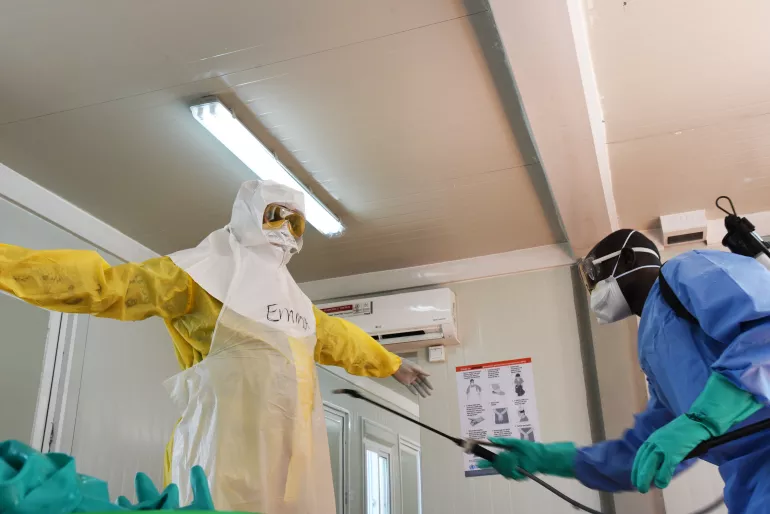
According to the State Department, the new financing will strengthen national emergency operations centres, expand disease surveillance systems, enhance laboratory testing capacity, and improve infection prevention and control measures across at-risk countries.
In South Sudan, where weak health infrastructure and porous borders heighten outbreak risks, partners have intensified screening at points of entry and strengthened early warning systems. The International Organization for Migration has supported more than 30,000 traveller screenings and trained frontline workers to improve community-based surveillance and early detection.
Across the region, U.S.-funded partners are also conducting health worker training, distributing essential supplies, and running public awareness campaigns aimed at countering misinformation about Ebola transmission.
In eastern DRC, the outbreak epicentre, humanitarian agencies including UNICEF have delivered 150 metric tonnes of water, sanitation and hygiene supplies to frontline facilities in Bunia, supporting roughly 100,000 people for six months.
Response operations also include contact tracing, safe and dignified burials, and rapid decontamination of affected areas. In Uganda, more than 1,000 village health teams have been trained to strengthen surveillance, while cross-border monitoring continues.
Medical partners such as Medair and International Medical Corps are supporting over 100 health facilities in eastern DRC, providing treatment services, screening, and laboratory support through mobile diagnostic units.
The United States reaffirmed that it remains the largest financial contributor to Ebola response efforts and reiterated its commitment to strengthening preparedness and resilience across the region.