South Sudan ‘will not rush’ UN’s directive banning sale of live animals
Warning: Undefined array key 0 in /home2/cityrevi/public_html/wp-content/themes/_city/single.php on line 65
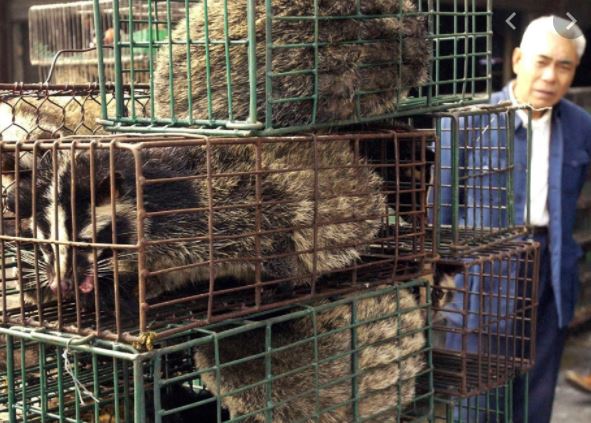
The ministry of environment and forestry has said that it will not rush into implementing the recent direct by the United Nations Agency, banning the sale of live animals.
Last week, World Health Organization (WHO), World Organization for Animal Health (OIE) and United Nations Environment Programme (UNEP) issued a joint interim guidance on ‘reducing public health risks associated with the sale of live wild mammals in traditional food markets around the world.
But according to the Undersecretary of the Ministry of Environment and Forestry Joseph Africano Bartel, there is need to study the report and understand it.
“They made that announcement but it doesn’t mean that it has to be implemented immediately so we will try to study it and try to look in to what kind of diseases they are talking about because they have to be specific,” Bartel said.
He said that they would give a comprehensive response later after understanding the concerns of the agencies with regards to the sale of animals.
“At the moment we have just gotten that report, and we have not yet given it an official report so until we get to the moment that is when we will respond.
But what I know is that we have in the market are chicken, cows, sheep and goats and I don’t think we have danger from them but we will have to study,” he Bartel argued.
Ban to be effected
According to the United Nations bodies, the guidance tables an appeal to countries to suspend the sales of captured live animals on account that some of them are hosting contagious and dangerous diseases.
Animals particularly wild animals are the source of more than 70 per cent all emerging infectious diseases in humans, many of which are caused by novel viruses. Wild mammals, in particular, pose a risk for the emergence of new diseases. They come into markets without any way to check if they carry dangerous viruses,” it stated partly.
The document further cautioned that there was a risk of direct transmission of the diseases to humans as a result of ‘coming into contact with the saliva, blood, urine, mucus, faces and other body fluids of an infected animal.’
It further warned that there could be additional risk of picking up the infection from contacts with areas where animals are housed in markets, objects or surfaces that could have been contaminated with such viruses.’
According to the United Nations bodies, the guidance tables an appeal to countries to suspend the sales of captured live animals on account that some of them are hosting contagious and dangerous diseases.
“Globally, traditional markets play a central role in providing food and livelihoods for large populations. Banning the sale of these animals can protect people’s health – both those working there and those shopping there,’’ the agencies stated.
This comes after a recent international expert mission—that was sponsored by the World Health Organization (WHO) to investigate the origin of the COVID-19 pandemic—concluded that the virus may have jumped from a bat via an unknown animal to humans.
According to a March 29 news report by AFP, the scientists hypothesised that the theory fronting the argument that the virus may have originated from a bat was ‘‘likely and very likely’’. But it ruled out the notion of a viral leak from a laboratory as ‘‘highly unlikely’’.
The international mission left Wuhan, China, with an inconclusive end on February 9, amidst diplomatic tussles pitting China and Western countries as blames escalated over the issue.
Another theory that was put to test was the notion that the virus may have moved from bats to humans directly which was ruled as a possibility