15 Governments Adopt Mombasa Declaration to Strengthen Global Fisheries Transparency
Warning: Undefined array key 0 in /home2/cityrevi/public_html/wp-content/themes/_city/single.php on line 65
Fifteen national governments from Africa, Asia, the Caribbean, Europe and the Pacific have adopted the Mombasa Declaration at the 11th Our Ocean Conference, marking a coordinated global push to strengthen fisheries transparency and combat illegal, unreported and unregulated (IUU) fishing.
The declaration calls on coastal and flag states to improve the collection, sharing and accessibility of fisheries data, with particular emphasis on vessel identification, ownership records, licensing systems and fishing activity monitoring. It is designed to strengthen accountability and improve enforcement across global waters.
It also builds momentum for the Global Charter for Fisheries Transparency, which outlines 10 low-cost or no-cost policy principles that governments can adopt to improve ocean governance through stronger transparency frameworks and data-driven management of marine resources.
The initiative has been endorsed by Belgium, Cameroon, Chile, the Dominican Republic, France (on behalf of its overseas territories), The Gambia, Ghana, Guinea, Liberia, Panama, Papua New Guinea, Peru, the Republic of the Congo, Somalia and South Korea. Signatory states are expected to begin implementing the commitments immediately, while also encouraging additional countries to join ahead of the next Our Ocean Conference in 2027.
Coastal communities and small-scale fishers remain among the most affected by IUU fishing, which undermines livelihoods, threatens food security and accelerates the depletion of marine ecosystems. The declaration seeks to address these challenges by promoting transparency reforms that make fisheries governance more accountable and equitable.
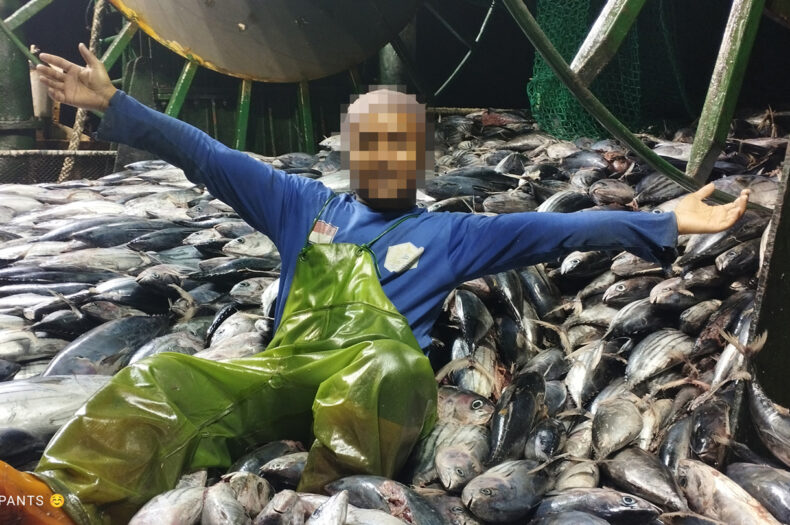
IUU fishing is estimated to cost the global economy up to $50 billion annually and is frequently linked to illegal labour practices, including unsafe working conditions and forced labour at sea. Limited transparency in vessel ownership and supply chains has been identified as a key factor enabling these practices to persist.
Through the declaration, countries commit to practical reforms including modernising vessel registries, publishing fishing authorisations and improving information-sharing between governments to strengthen monitoring and enforcement systems.
Ghana’s Minister for Fisheries and Aquaculture, Emelia Arthur, said fisheries are central to national livelihoods and food security, noting that a significant share of the population depends on the sector for both income and nutrition. She welcomed Ghana’s participation as part of a collective international effort to improve transparency in the sector.
France’s Minister Delegate for the Sea and Fishery, Catherine Chabaud, said greater international cooperation is essential to effectively combat illegal fishing, adding that transparency is a critical foundation for stronger fisheries governance.
The declaration was developed with support from the Coalition for Fisheries Transparency and its partners, who have been working with governments and experts to advance reforms in fisheries management and accountability systems.
Maisie Pigeon, Director of the Coalition for Fisheries Transparency, said the initiative reflects growing global momentum toward stronger ocean governance and data-driven fisheries management across diverse economies and regions.
Oceana Vice President Beth Lowell said transparency is essential to protecting ocean ecosystems and coastal livelihoods, while Environmental Justice Foundation CEO Steve Trent noted that greater openness helps expose abuses and rebuild trust in fisheries systems.
Global Fishing Watch CEO Tony Long described the declaration as a turning point, saying that shared vessel data and tracking systems will make it harder for illegal operators to evade detection.
Bloomberg Philanthropies Environment Program head Antha Williams said improved access to reliable fisheries data will strengthen decision-making and support more sustainable ocean management, particularly for communities that depend on marine resources.