Absent Justice: Allowances for MPs and Delayed Public Service Salaries
Warning: Undefined array key 0 in /home2/cityrevi/public_html/wp-content/themes/_city/single.php on line 65
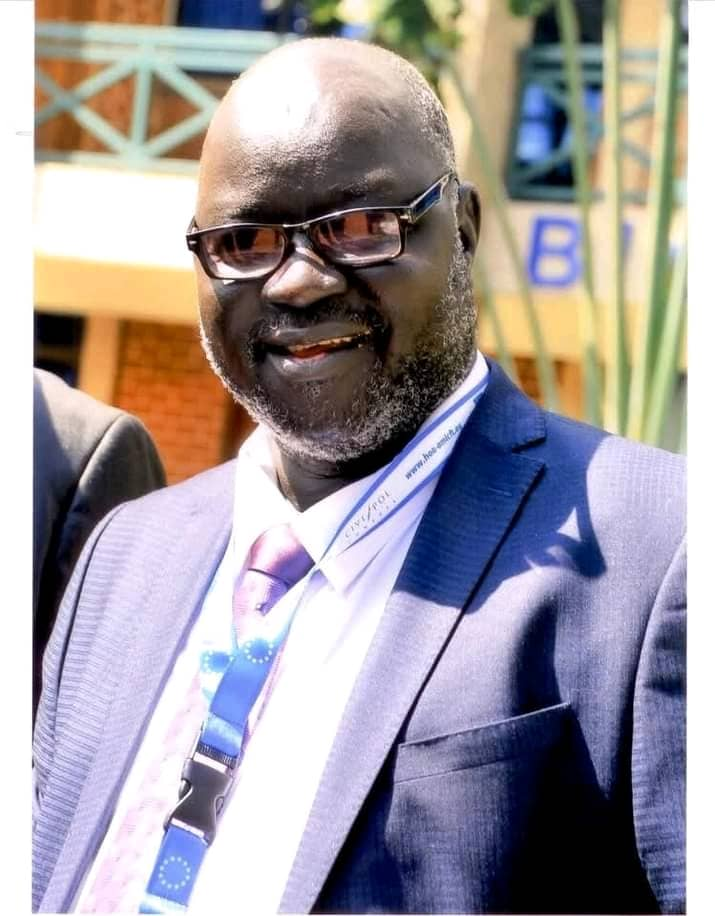
By William Sunday D. Tor
The recent decision by the Government of South Sudan to grant medical allowances to members of the Transitional National Legislative Assembly and the Council of States has sparked wide debate over governance, social justice, and state priorities—at a time when many public servants have suffered months-long delays in receiving their salaries, and some have gone more than a year without pay.
According to media reports published on 29 May 2026, each member of parliament received a medical allowance of five thousand US dollars. Reports indicated that some MPs received these sums before the Eid al-Adha holiday, while others are expected to receive their entitlements after the holiday. The allowances covered members of both the Transitional National Legislative Assembly and the Council of States.
George Anger, an MP from the Sudan People’s Liberation Movement (SPLM), defended the decision, explaining that several parliamentarians had died from illness and that this support is necessary despite its limited amount. MP Madelina Abuk of the SSOA said the amount is insufficient to cover treatment costs and travel abroad, especially given ongoing inflation and the depreciation of the South Sudanese pound.
No fair-minded person disputes the right of members of parliament to access health care and medical support. Like other citizens and public servants, they deserve decent health services and working conditions. However, the core of the debate is not the granting of these allowances to MPs but the stark contradiction between the situation of a small group of government officials and the suffering of thousands of public servants who continue to serve the state without receiving their salaries.
Public concern about this issue is understandable and justified. Teachers continue to educate the nation’s children, health workers continue to provide medical services to patients, and security personnel continue to protect national security and stability despite harsh economic conditions. Yet many of these employees have not been paid for long periods, pushing numerous families to the brink of poverty and leaving workers unable to meet basic needs.
Civil society activist Dorothy Drabuqa Ambrose expressed this general sentiment when she supported providing health support to MPs but criticized the government’s continued failure to pay salaries to public servants and security personnel. Her remarks reflect growing public worries about fairness and equity in the distribution of public resources.
What worsens the bitterness among public servants is the growing perception that the problem is not only a shortage of financial resources but also a question of priorities. While official bodies repeatedly cite the economic crisis and falling revenues as reasons for salary delays, resources seem available when it comes to institutions or groups with political influence. This reality has prompted many citizens to ask whether non-payment of salaries has become a normalized part of government decision-making rather than being treated as a national crisis that requires urgent remedy.
Prolonged salary delays have produced deep feelings of frustration and marginalization among public servants. Unlike politically influential groups, most public employees lack effective means to claim their rights and entitlements. Fear of administrative punishment, dismissal, or other forms of retaliation pushes many to remain silent despite severe economic and psychological pressures.
The perception that some institutions receive preferential treatment while others are neglected has increased public resentment. Such disparities create the impression that state institutions and national resources are managed to serve a politically privileged few rather than to advance the public interest. Whether this impression is accurate or not, its effects are dangerous: it erodes trust in state institutions and weakens confidence in leadership and in the principles of equality and justice.
In any democratic system, public resources belong to the people and must be managed according to the law and the national interest. State revenues are not the property of an individual, party, or specific institution; they are national assets entrusted to public officials to manage on behalf of citizens. Therefore, allocating these resources should be guided by principles of fairness, transparency, and accountability.
Paying salaries is not a government favor or a privilege; it is a legal obligation and a core responsibility of the state. The national budget places employees’ salaries among public spending priorities because no institution can perform effectively if its staff are deprived of their livelihoods. When some institutions receive extra benefits while others struggle to obtain their basic rights, legitimate questions are raised about equality before the law and the government’s commitment to its stated duties and policies.
More importantly, these disparities clash with the principles on which the Sudan People’s Liberation Movement was founded. The movement’s struggle was fought for justice, equality, human dignity, and the construction of a society free from discrimination and unfair privileges. The vision of the new Sudan rejected regimes that concentrated opportunities and advantages in the hands of a few at the expense of the majority. Policies that foster feelings of inequality among public servants therefore risk undermining those historic principles and weakening the moral foundation upon which the state was built.
From this standpoint, the purpose of this article is to make a respectful appeal to the leadership of the Sudan People’s Liberation Movement and the Government of South Sudan to reaffirm principles of social justice, good governance, and accountability. The wellbeing of a public employee should not be determined by the institution in which they work or by the level of political influence they possess; all public servants contribute to nation-building and deserve equal respect and recognition.
The article also calls for implementation of the President’s directives to improve the conditions of public service workers and ensure timely payment of their salaries and entitlements. President General Salva Kiir Mayardit has repeatedly emphasized the need to address public servants’ suffering, but translating these directives into practical, tangible measures has become an urgent necessity to restore citizens’ trust in state institutions.
All public sector workers are equal before the law. If MPs require medical allowances, then teachers, doctors, nurses, civil servants, and security personnel also deserve comparable attention. The dignity, welfare, and rights of public employees must be preserved without discrimination.
Ultimately, the strength of a country is not measured solely by how it cares for its political elite but by how justly it treats all who serve it. South Sudan’s future, stability, and unity depend on a public service that is valued, respected, and adequately supported. Ensuring regular salary payments and improving conditions for all public servants is not merely an economic necessity; it is a moral duty, a demand of justice, and a real test of political leadership.
May God Almighty bless our beloved country.
William Sunday D. Tor: Writer and researcher from South Sudan, lecturer in Diplomatic Studies, International Relations, Security Studies, and International Development at Starford International University, Juba. He focuses on good governance and state-building, analysis of national liberation trajectories and post-independence political transitions, and centers his work on issues of justice, recognition, and social cohesion. He is the author of “South Sudan and the Problem of Achieving the Goals of Independence.” Contact: WhatsApp +211922402162