Nassiwa: She unchained herself from forced army conscription to shape the country
Warning: Undefined array key 0 in /home2/cityrevi/public_html/wp-content/themes/_city/single.php on line 65
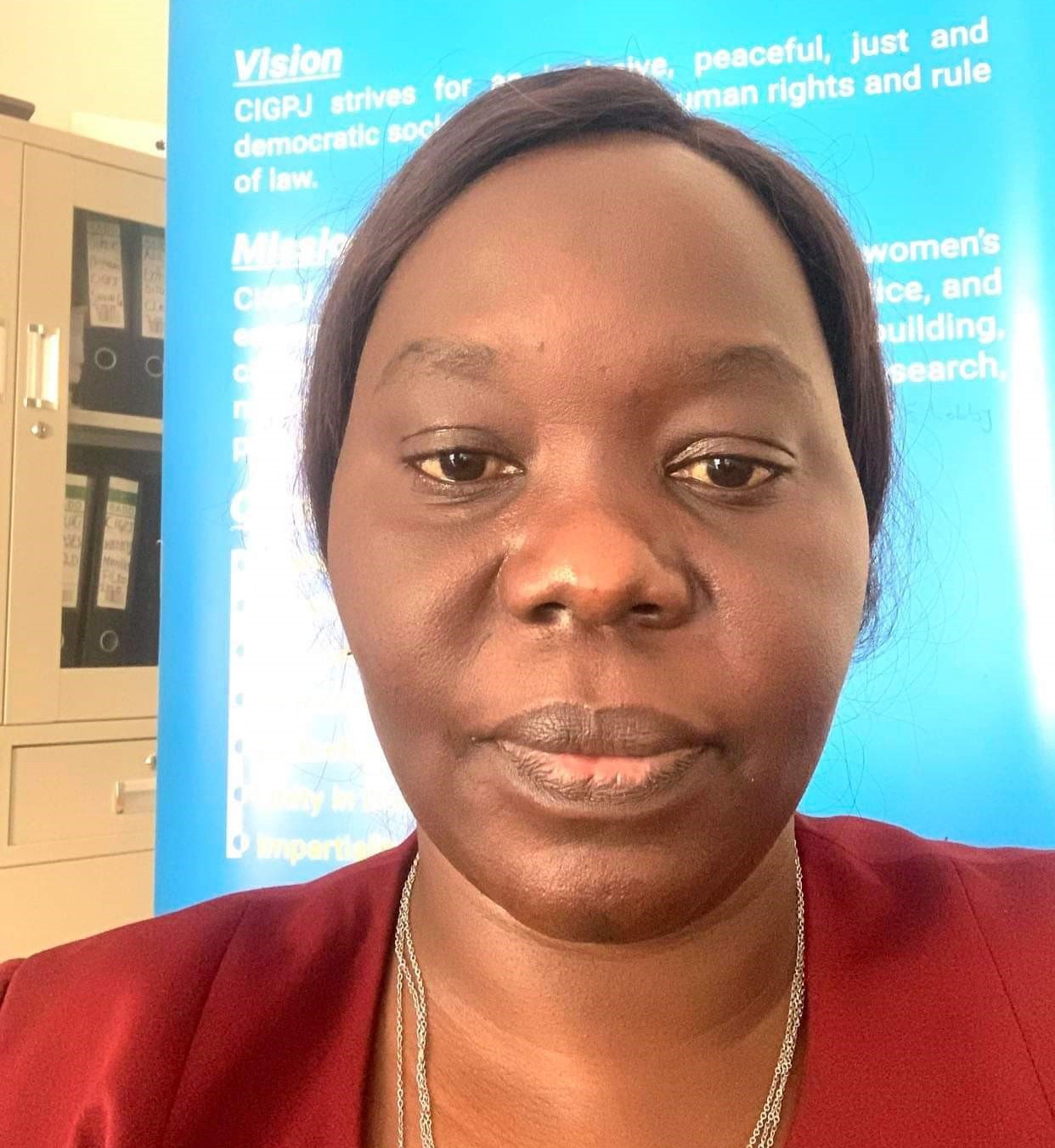
Jaqueline Nassiwa trekked through the jungle, sometimes staying for as long as a month before moving again to the next village, only to find rebel fighters waiting for people like her.
The Sudanese Army had regained moment. The eastern front had disintegrated after the 1992 split within the rebel ranks.
The main rebel faction had taken Yei only to lose it shortly after to the Sudan Armed Forces, triggering a mass exodus of displaced people looking for shelter. Losing town after town, rebel leaders, preparing for the long haul, turned to forced recruitment of kids.
“I was a young girl by then,” Nassiwa, the human rights lawyer who played behind-the-scenes supporting roles in both the referendum that earned South Sudan independence and the women’s representation in the recent peace talks……
“The army was there and they were forcing kids to join the army,” Nassiwa says.
The recruitment, according to one witness, was based on the principle that any child old enough to go to school was old enough to join the army. A crude test determined who was old enough to go to school: If a child’s arm raised across the head touched the opposite ear, then that child was old enough.
“They said all school-going kids should go to the army,” Nassiwa recalls. ”I refused to go to school for that one year.”
Forced conscription only stopped when the bishops met Dr. John Garang, convincing him of the need to keep kids in school and paving way for Nassiwa, like hundreds of others, to enroll in Kaya Primary, a border school with Uganda.
‘Anonymous school’
Yet, the incident exemplifies fortitude, borne out of years of war, but also of an ability to negotiate herself out of tight spots. Enrolled in Christ the King, one of Yei’s best schools, the trek to refugee life was filled with stopovers, where she enrolled in bush schools, in churches, or under trees. There were no lights.
“The studies were hard, but we were determined,” Nassiwa says. “When the moon is bright you write big [letters] so that you will be able to see; and when it’s raining, you have to run home.”
One school had a grass-thatched headmaster’s office and a church partitioned to seat classes 3 to 6; classes 1 and 2 were held under trees. A single teacher would teach per day. “I did not even know the name of the schools,” she says.
Pupils did not pay fees but were expected to bring in-kind items for teachers’ houses, Boys brought poles to erect teachers’ huts. Girls molded the mud. Nassiwa saw a way out. “I was young and it was difficult,” Nassiwa says, the second last in a family of 6 siblings. She bargained with the teachers to let her father bring the poles. “My dad was very supportive with education,” she says. “So, he could go and get it and bring it to the school so that I could go on with my education.”
Resilience also meant that she didn’t give up without a fight. At the border school, when other pupils scorned her for escaping conscription, she figured out a way to defy the bullies. “They would say, ‘You are just a “muwatan” (civilian)’ – and they would make you sit behind, and I refused to sit behind,” she recalls. “I would wait until the teacher was coming, then I would sit in front. And when the teacher is there, [other kids] cannot force you to sit behind. So we studied there like that.”
When she was in class 1, one perfect always pushed girls back to the end of the queue at the lavatory because he loved seeing them relieving themselves on their clothes. One day, Nassiwa returned the girl to the front of the queue. The perfect hit her on the head with a stick. She picked a stick and hit back, forcing the nun to separate them. The nun caned the prefect and took all girls to the front of the queue. “From that time I knew that girls mattered,” says Nassiwa. “You can’t allow your rights to be violated because you are a girl.”
Later, as a refugee studying in St. Mary’s, Adjumani, Uganda, pupils would line up at the borehole. The people from the villages would always push the refugees to the end of the line. One day, Nassiwa led a revolt. She called a meeting with fellow refugee children. “We are big girls,” she told them. “If they don’t want us here, let them send us back home.” They hatched a plan: arrive early at the borehole. When the members of the host communities arrived to displace them, she firmly held onto the pump. Chaos broke loose. When the nun came to settle the melee, the refugee students got a chance to report. The nun broke new rules: henceforth, host communities shouldn’t get water until the students had gotten water. “I like it when women speak for their rights than someone speaking for them,” Nassiwa says. “That is what motivates me: can I empower more women?”
Mourning during exams
Resiliency served her well years later. When her father, a medical assistant with the SPLA, passed on, she was doing her final law exams at Makerere University. Orphaned when he was young during the first Sudanese war, Anya-Nya, her father was her hero, always pushing them to study because his education had been cut short by war. His uncle, who took him in after he lost his parents, also died a refugee in then Zaire, forcing him to drop out of school and study nursing. Nassiwa was shattered. “I was left with two papers in the university and I was contemplating: Should I continue, should I not?”
She saw her world collapsing. “When I was young we had school plays and we promised ourselves that whatever we said, we would become,” she says. Witnessing her brother beaten by soldiers and her community marginalized, she was determined to become a lawyer. “I used to sing: ‘I am a lawyer, I am a lawyer. I am a lawyer in Christ the king’.”
Some women talked her out of dropping out, telling her: You know what? You don’t need to drop out when you can. All she would be left with would be refugee life with her mother in Bidi.
She got the energy to walk into an exam the next morning.
“At first my brain was blacked out,” she recalls.
“I sat for 15 minutes and the lecturer was watching me and asked me, Jacqueline are you alright – this lady is not writing, she is not understanding. I told him I lost my dad. I rested for 15 – 30 minutes and I started doing the paper. I thank God that that was the paper I did well.”
After she completed her exams that afternoon, the family traveled throughout the night, taking her body to Yei. “By then you could cross the border in the night.”
Back to the village
Perhaps, more than anything that resiliency prepared her not only to step in her father’s shoes when he passed on but also to withstand war.
“In my family, I became, like, the pillar because my dad died when I was already big,” she says. “But you know Most of our families in South Sudan, the conflict in South Sudan has affected us, even if you have a parent, he will not be able to support?”
She now cared for her mother who in turn cares for her biological children – two boys and a girl. She also has adopted children. Days before the 2013 war erupted, Nassiwa ferried the family back to Juba, hoping for a new life. “I think it was two days; then the conflict started,” she says.
She says, “I started becoming stronger from that time because when I grew up I also walked in the village, we were displaced in Yei.”
The war also made her reflect on her mission in life and place in the country. Before that, most of her work was in civic engagement. For instance, as personal secretary to South Sudan Referendum Bureau chairperson Justice Chan Reech Madut, she largely managed the office, drafted press releases, and kept an eye on the data to ensure that it was authentic. As the NDI Constitutional Advisor, she helped the Constitutional Review Commission develop civic education materials and consultation toolkit and engaged civil society to conduct civic education at the grassroots. But by 2017, she felt she could do more.
“I felt that with the international organizations you can be rewarded, you are paid well, you have privileges, but it didn’t allow me to do the work for South Sudanese and my voice was missing,” she says. “I was, like, citizens’ participation without effective programs on women cannot work.”
She felt that international organizations were not doing enough to mainstream gender. “That passion burnt in me: I thought, what can I do?” she adds.
She then started the Centre for Inclusive Governance, Peace, and justice to mentor and create women’s networks and the Women Monthly Forum to amplify women’s voices through communiqués and countrywide protests, pressing fighters to continue the Addis Ababa talks.
She challenges women to give each other a chance so that they can grow as a team.
“One thing I tell the women is I can be at the negotiation table, but because I know my weakness, I cannot be effective. I know – delegates Alokir, Rita, Amer Aketch – could be there. If they have the strength within to bang the table and say, ‘This is what they want’, I give them the chance to go and bang it,’’ she remarks.