CEPO condemns rising Killings on Juba–Rokon–Yambio Road, demands govt. Action
Warning: Undefined array key 0 in /home2/cityrevi/public_html/wp-content/themes/_city/single.php on line 65
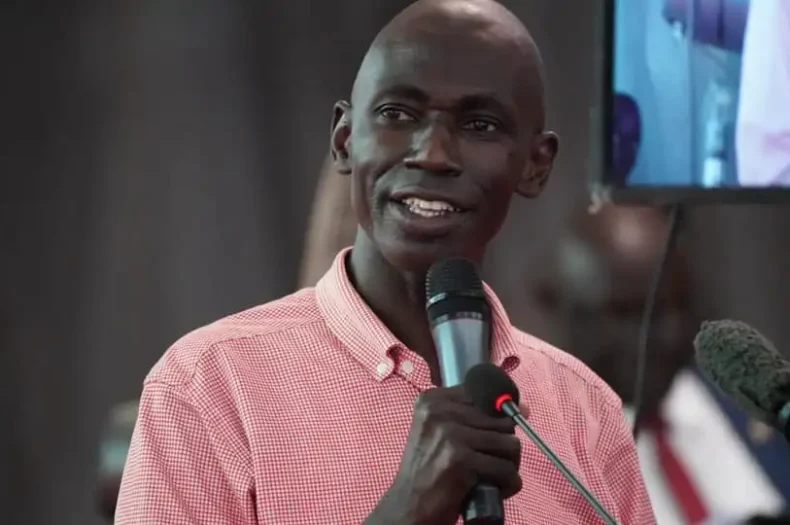
Rights activist concerned that perpetrators oftenly described as “unknown gunmen,” but little effort done to bring them down
By Emmanuel Mandella
The Executive Director of the Community Empowerment for Progress Organization (CEPO), Edmund Yakani, has strongly condemned the continued killings of civilian travelers along the Juba–Rokon–Yambio highway, describing the attacks as criminal acts and serious violations of human rights.
Yakani’s remarks come following the latest deadly incident in which civilians traveling between Kuda and Rokon Payam were reportedly attacked and killed by unknown gunmen, further escalating fears among road users along one of South Sudan’s most important transport corridors linking Juba to Western Equatoria State.
“The targeted killing of civilian travelers on the Juba–Rokon–Yambio road is a criminal act and a grave violation of human rights,” Yakani said. “This is not the first incident of its kind. The government should undertake a proactive role in ensuring the safety and protection of civilian travelers between Kuda and Rokon, including elsewhere across the country.”
He warned that persistent attacks against innocent civilians undermine public confidence in state institutions and threaten freedom of movement and economic activities.
Yakani further cautioned that although the perpetrators are often described as “unknown gunmen,” civil society organizations are closely monitoring developments.
“Some of these criminal actors who turn out to be unknown gunmen, we will continue tracking their actions and expose them to regional and international human rights entities for reporting and accountability,” he stated.
The latest attack adds to a growing list of violent incidents reported along the Juba–Rokon–Yambio route since the beginning of the year.
Earlier this year, a woman was reportedly killed by armed attackers while traveling along the same road, sparking concern among local communities and transport operators.
In another incident, two traders traveling from Juba to Ibba County mysteriously disappeared while using the route. Their whereabouts remain unknown, and their disappearance continues to raise concerns among business communities in Western Equatoria State.
Few weeks ago, the region was again shaken by the killing of a teenage goalkeeper who played for Villa United Football Club in Yambio. The young footballer was reportedly attacked and killed by armed men while traveling along the highway.
The road also claimed the life of Bakama Henry, the grandson of the Chairperson of the Western Equatoria State High Committee for Elections. His death generated widespread condemnation from political leaders, civil society organizations, and community members.
Most recently, on Friday morning, Major Haidar was reportedly killed by unknown gunmen while traveling along the same route, further highlighting the deteriorating security situation.
The repeated attacks have left residents, traders, public servants, and transport operators living in fear.
Several travelers interviewed expressed frustration over what they described as the government’s inability to secure the highway.
One traveler, who requested anonymity for security reasons, said many passengers now travel with fear whenever they use the road.
“We don’t know whether we will arrive safely or not. Every trip has become a risk. Families are worried whenever their relatives travel from Juba to Western Equatoria,” he said.
A commercial vehicle driver who regularly operates between Juba and Yambio said transporters have become prime targets.
“We carry goods and passengers, but now every journey feels dangerous. The government needs to deploy more security forces and investigate these killings seriously,” he said.
A motorcycle rider who frequently travels between communities along the route said insecurity has significantly affected business.
“People are afraid to move. Sometimes passengers cancel trips because they fear being attacked. This insecurity is affecting our livelihoods,” he explained.
The growing insecurity has also attracted concern from senior government officials.
Recently, the National Minister of Agriculture and Food Security, Hon. Clement Juma Mbugoniwia, called on the governments of Western Equatoria State and Central Equatoria State to urgently investigate the killings taking place along the road connecting Juba and Western Equatoria.
Speaking at Nazareth Parish in Juba, the minister said the continued attacks have made movement increasingly difficult for citizens, farmers, and traders.
He noted that farmers are struggling to transport agricultural produce to markets, while traders face difficulties moving goods between Juba and Western Equatoria due to fears of attacks.
“The movement of our people has become difficult, and many innocent civilians are losing their lives along this road,” Clement said. “The authorities must investigate these incidents and bring the perpetrators to justice.”
The minister also urged citizens to minimize unnecessary travel while investigations continue and encouraged farmers to continue cultivating crops to boost food production and strengthen food security.
In addition, he called on communities to organize themselves into cooperative societies to improve access to support programs from the Ministry of Agriculture and Food Security.
Civil society organizations, community leaders, and residents are now calling for immediate intervention by both national and state authorities to restore security along the strategic Juba–Rokon–Yambio highway.
Observers warn that unless decisive action is taken, the continued attacks could further disrupt trade, agricultural production, humanitarian access, and preparations for South Sudan’s planned elections.
For many residents of Western Equatoria and neighboring regions, the road remains a vital lifeline connecting communities, businesses, and families. However, with the growing number of killings and disappearances, many fear that the route is increasingly becoming a corridor of insecurity rather than a pathway for development and economic growth.
Utilities
“Some of these criminal actors who turn out to be unknown gunmen, we will continue tracking their actions and expose them to regional and international human rights entities,” activist Edmund Yakani.