Egypt rejects adoption of Nile Basin conference resolution
Warning: Undefined array key 0 in /home2/cityrevi/public_html/wp-content/themes/_city/single.php on line 65
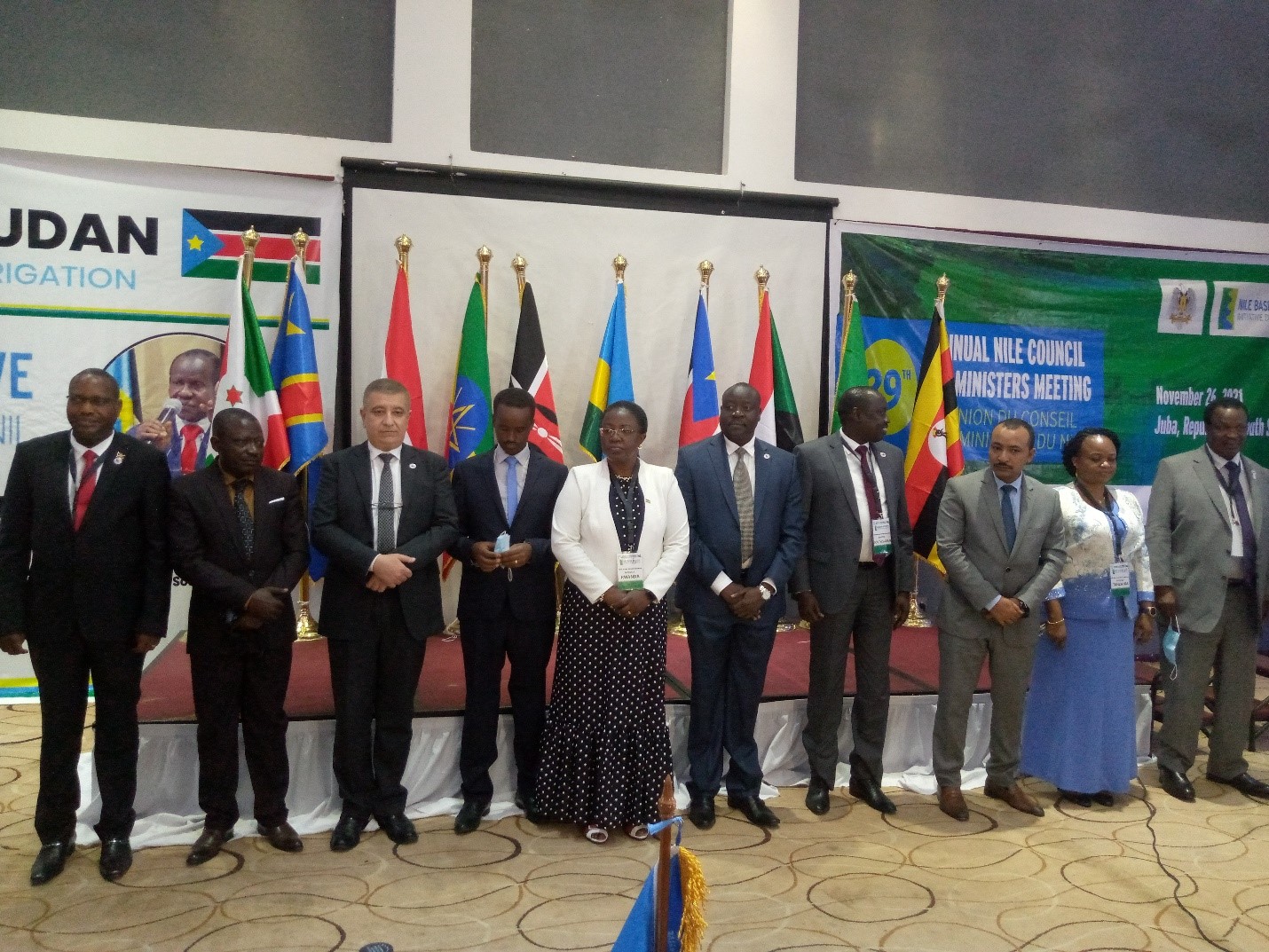
Egpyt has vowed not to adopt any resolution from the Nile Basin Council of Ministers’ Conference that kicked off in Juba yesterday.
Speaking at the conference, the Egyptian Chairman of the Nile Water Sector, Ministry of Water Resources and Irrigation, Dr Mamdouh Ahmed Antar, said that transboundary water cooperation is the key element in achieving development and maintaining peace and stability in the region, which calls for an all-inclusive approach.
“I would like to reiterate Egypt’s position with regards to the Nile Basin Initiative, an opposition that can be summarised following principles.”
However, Dr Antar said that this can be achieved if the principle of consensus is reached in making and adopting decisions.
He said there should be a principle of purification and consultation about claiming or executing projects in the Nile Basin not to inflict harm on the dam streamside.
Dr Antar stressed that Egypt strongly believes that the pursuit of development is a legal right to every country.
He stated that adhering to the principles would foster a climate of mutual understanding with a win-win formula, paving the way for constructive cooperation and benefits for the entire region.
“Therefore, I hope we can soon reach a mutual understanding regarding our concerns and interests in the management of our shared resources.”
However, he stated that Egypt will welcome new ideas to restart and break the stalemate in regional cooperation in order to reclaim the Nile Basin unit and move forward in establishing sustainable mechanisms to strengthen cooperation among Nile Basin countries.
Dr Antar emphasised that, in the context and framework of improving collective approaches to addressing common challenges, we welcome any ideas presented in the Nile-com.
“In this meeting, Egypt preserves its positions during the previous Nile-com meetings regarding the agenda, discussions, and outcomes of Nile-com accordingly.” Therefore, we (Egypt) will not be able to adopt the agenda of this meeting and its outcomes, ” Dr Antar stated.
However, he said they strongly believe that the meeting would bring the Nile Basin countries to an understanding of each other and witness milestones in narrowing the gap that for years has hindered ways of overcoming their differences in the region.
However, Nile Basin countries participating in the ongoing conference, are optimistic that the 29th Annual Nile Basin Juba conference will achieve regional cooperation and unity. Cairo, on the other hand, is concerned that the results will be ineffective.
As a result, Egpyt yesterday vowed not to adopt the agenda of the conference as well as the outcomes.
Juba is hosting the meeting to discuss the issues surrounding the Nile River and how the countries can work together to achieve a mutual understanding of its preservation.
All the other Nile Basin countries, such as Burundi, the Democratic Republic of Congo, Egypt, Ethiopia, Kenya, Rwanda, South Sudan, Sudan, Tanzania, and Uganda reaffirm their commitment to cooperate and regain the Nile Basin unit.
Eng Seleshi Bekele the Ethiopian Minister for Water, Irrigation and Energy said such kinds of forums will make the Nile Basin countries think beyond just cooperation within the region but in the entire community.
He said Ethiopia understands the future life of its sisterly Nile Basin countries, saying the country is committed to creating rooms for engagement as ways of prosperity.
“The Nile Basin forums like Nile-com and Nile TAC would make us share the ideas, share the resource, and share many other things in such a way that we will have shared prosperity among each other,”
Nile water dispute stems from filling of Ethiopian dam, decades of rising tensions.
Egypt relies on the Nile for more than 90 per cent of its water. The region’s population could increase by 25 per cent in 30 years, increasing demand at a time when Egypt would expect less water from the Nile.