UNHRC orders probe on human rights violations in Ethiopia
Warning: Undefined array key 0 in /home2/cityrevi/public_html/wp-content/themes/_city/single.php on line 65
The crisis in Ethiopia has raised eyebrows in the international political arena leading to a call for a probe, cessation of hostilities and dialogue. The United Nations Human Rights Council yesterday passed a resolution to establish “an international commission of experts on Ethiopia.”
The commission will investigate the reported allegations of human rights violations and abuses committed against civilians by the parties embroiled in conflict in Ethiopia.
“The UN Human Rights Council adopts by vote a resolution establishing an international commission of experts on Ethiopia to conduct an investigation into allegations of human rights violations and abuses by all parties to the conflict,” read the statement on the UNHRC Twitter account.
According to Morad News Twitter post, the Ethiopian government slammed the investigation accusing the UN Human Rights Council of having been “hijacked”.
“UN Human Rights Council agrees to set up a probe into violations against human rights committed in Ethiopia’s war. Ethiopia (government) slams the proposed investigation and accuses UN Human Rights Council of having been hijacked,” read the Morad News Twitter post.
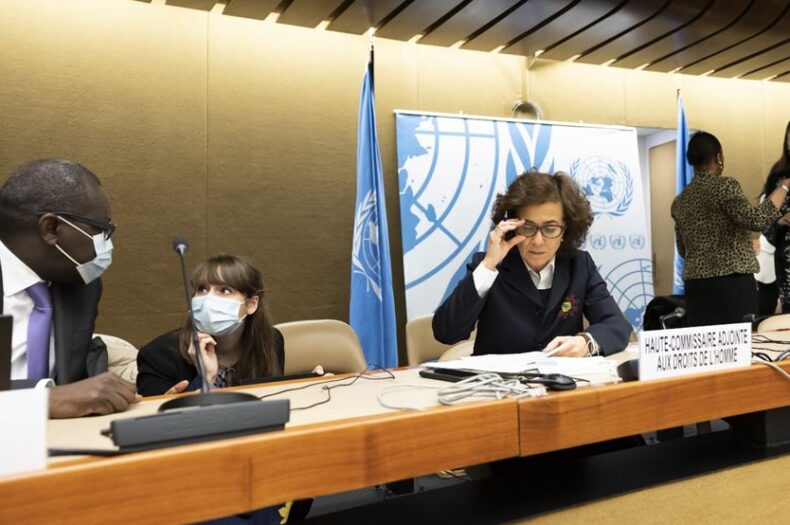
In her speech at the UN Human Rights Council Special Session on the situation in Ethiopia, the Deputy High Commissioner for Human Rights, Nada Al-Nashif, called for urgent investigation of gross human rights violations in Ethiopia.
“The government’s establishment of a domestic mechanism to implement human rights recommendations is a step forward. I note that, stated commitments to investigate cases of sexual and gender-based violence and prosecute perpetrators, have fallen short, both in transparency and effectiveness,” Nada noted.
“We will continue to work with the Ethiopian Human Rights Commission and to support genuine efforts by the authorities to advance accountability for violations committed in the context of the conflict, in Tigray and elsewhere across the country.”
She urged the government to prioritise investigations into the matter fairly and through independent proceedings adding that if accountability is not ensured, there could be a need for international intervention for investigations.
“The onus is on the State to discharge its primary responsibility to deliver fair and independent proceedings that address the full range of violations identified – not only isolated individual instances,” she said.
“And take into consideration applicable command responsibility. Without significant accountability efforts, an international mechanism could be an important complement,” she added.
Nada mentioned that the state of emergency contributed to violations of human rights and thus should have been declared according to international laws.
During the Human Rights Council Special Session on the Situation in Ethiopia yesterday, the U.S Mission Geneva Chargé d’Affaires Benjamin Moeling said the United States has condemned atrocities committed by both the Ethiopian government forces and the Tigray People’s Liberation Front (TPLF).
Call for peace
“The United States is deeply concerned about the escalating crisis in Ethiopia and widespread human rights abuses committed by all parties to the conflict,” he said.
“We condemn the use of starvation as a weapon of war, which the Ethiopian government has reportedly done, by blocking humanitarian access and detaining tens of thousands of ethnic Tigrayans under life-threatening conditions.”
Moeling called for a mechanism to be devised “to investigate, report on, and collect and preserve evidence of all violations and abuses by the parties to the conflict.”
He called for the cessation of hostilities, providing humanitarian access, starting negotiations without preconditions and hindrance, respecting human rights and denouncing provocative rhetoric.
“We call for the parties to end hostilities, enable unhindered humanitarian access, enter negotiations without preconditions, refrain from inflammatory rhetoric, and respect human rights,” he added.
“The Ethiopian government (should) release all civilians and allow international monitors timely access to detainees; those responsible for violations and abuses (should) be held accountable.”
On behalf of the European Union the Ambassador, Permanent Representative of the Republic of Slovenia Anita Pipan said the European Union had been following the situation in Ethiopia.
“The gravity and scale of violations and atrocities committed against civilians by all sides, including sexual and gender-based violence and ethnic violence are unacceptable,” Anita said.
“The EU remains convinced that there is no military solution to this crisis. We reaffirm our strong support for African Union and regional mediation efforts, led by High Representative Obasanjo.”
She warned of hate speech and incitement and called for justice to those detained since the state of emergency was declared.
“The EU has welcomed the joint report and called for further investigations. We are encouraged by the steps taken by the Ethiopian authorities to follow up on the report’s findings. We regret that Eritrea and the TPLF have not shown willingness to take up the reports’ recommendations,” she added.
She stressed that the efforts must be geared towards tangible peace and not any more steps to aggravate the situation.
“All efforts should focus on helping bring peace and justice to Ethiopia and its people. The EU’s hope remains to adopt the resolution by consensus, with the support of the countries concerned.”
Human rights violations
On November 3, the probe that was carried out by the UN Human Rights and the Ethiopian government’s Human Rights Commission found human rights abuses that “may amount to crimes against humanity and war crimes.”
The probe discovered that the parties to the Tigray conflict “had committed violations of international human rights, humanitarian, and refugee law, according to the United Nations High Commissioner for Human Rights Michelle Bachelet.
The crimes were labelled as unlawful killings, extrajudicial executions, torture, sexual violence, violations against refugees, and forced displacement of civilians. However, further investigations were recommended to dig out whether genocide did occur.
She said the majority of the crimes had been committed by the Ethiopian and Eritrean forces, “the majority of the violations … appear to have been committed by Ethiopian and Eritrean forces,” Bachelet said. But since then, the conflict has presented “an increasing number of allegations of human rights abuses by Tigrayan forces, as well as continued reported violations by Ethiopian and Eritrean defence forces,” she added.
Those who carried out investigations are said to have not had limited access to Tigray and basically Axum that was reported by Amnesty International that hundreds of unarmed civilians had been “systematically killed” in November 2020 which the Ethiopian government did not comment on.
The conflict
The Ethiopian conflict started in November 2020, a war the BBC describes as “a power struggle, an election and a push for political reforms.”
The Ethiopian Prime Minister Abiy Ahmed launched a military offensive on the Tigray People’s Liberation Front (TPLF) on November 4, 2020, claiming that he was revenging an attack on government troops.
The conflict is said to have been caused by Ethiopia’s federal system which existed since 1994 where affairs of the 10 regions were controlled by ethnic groups which does not coincide with Abiy’s political reforms leading to prosperity and stability, however human rights and democracy remained areas of criticism.
Following protests which led into the government reshuffle, Abiy climbed into the throne with his party “the Prosperity Party,” and ended the dispute with Eritrea which earned him the Nobel Peace Prize in 2019 as criticism from Tigray grew.