Kiir directs Makur to fix foreign exchange rates
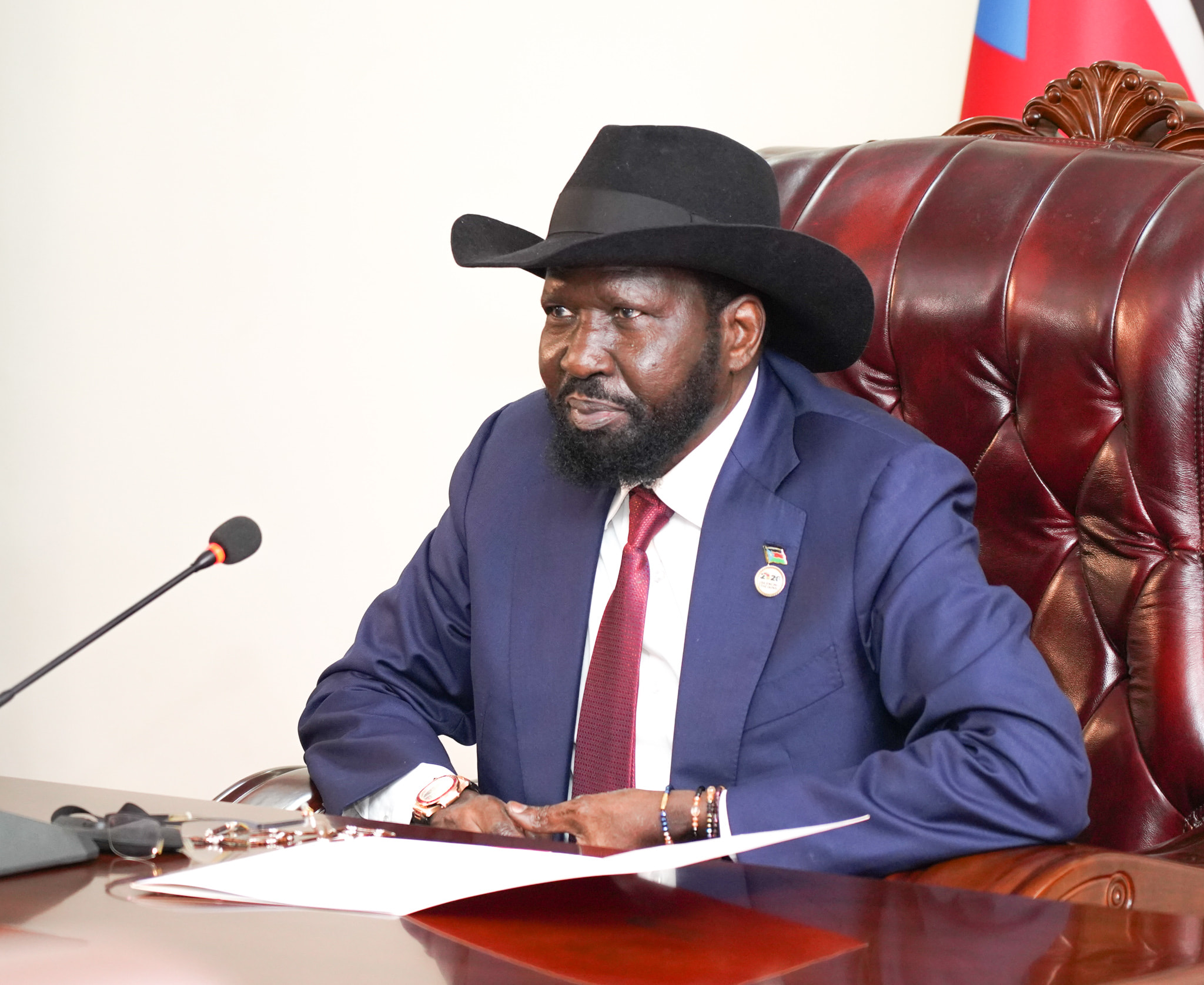
President Salva Kiir has directed the new governor of the Bank of South Sudan, Moses Makur Deng, to fix the exchange rates between the US dollar against and the South Sudanese Pounds, which remains largely unstable and fuels inflation.
Kiir made the statement during the swearing-in ceremony of the new Central Bank boss in Juba yesterday.
After taking the oath, Makur was received in his office, where he briefed the staff in a closed-door meeting.
Addressing the press, the communication officer of the Central Bank, Chance Baniko, said President Kiir had asked Governor Makur to lower the exchange rate from SSP400 per dollar.
“The president also cautioned the governor that he was not appointed to punish his subjects and, thus, should opposition arise; he should handle it amicably to push the bank towards its goals.”
Baniki said Governor Makur thanked the president for the trust he bestowed upon him to lead the bank and push it forward.
While addressing the staff in his office, the governor assured the institution of his commitment to promoting collective decisions to make a difference in his tenure.
He asked for forgiveness from any of the staff, saying the work should begin when there are “zero problems.”
Decree
Before his appointment, Makur was the Director-General for supervision and research at the bank.
He replaced Dier Tong Ngor, who had a lot of accomplishments, including the introduction of the SSP 1000 banknote, and the auction of the dollars to commercial banks and forex bureaus, which lowered the dollar exchange rate from SSP600 to SSP400 per dollar. Tong also initiated the construction of BoSS headquarters in Juba.
Despite the efficacy of fiscal tools that somewhat fixed the exchange rates, there is still an outcry on the streets of Juba concerning the skyrocketing commodity prices.
As a result, economists see a massive task ahead of him in lowering both food prices and exchange rates even further. The new governor now has it all to take up the public financial management (PFM) reforms as the public wonders whether he will continue with the auction or whether he will leave it aside as an old policy.
A lot on the plate
He will oversee and control the banking industry by setting monetary regulatory policies, determining interest rates, maintaining stable prices, controlling national money supply and issuance, foreign exchange rates, and gold reserves.
The exchange rate against the dollar is at 441.3853, buying: 428.3395, and indicative: 434.8624. The Bank of South Sudan had been auctioning dollars to 30 commercial banks and 60 forex bureaus, while four forex bureaus are yet to be licensed.
Fit for the job
Dr Abraham Maliet Mamer, who works as the economic advisor in the office of the Vice President for the Economic Cluster, exuded confidence in Makur, saying he befits the role as the “son of the bank” given the expertise he has amassed over the years.
“I think in terms of employment or appointment as the governor, it is correct because he has been in this bank since the beginning,” Dr Maliet said.
Dr. Maliet advised the Ministry of Finance and Planning to involve economic think tanks in crafting remedial policies that would fix the economy.
“The Minister should collect all the brains of this country together with the head of the economic cluster (Dr. Wani Igga), and sit down to develop a new policy.”
For him, stimulating the non-oil revenue tap would be key to ensuring that the country’s Gross Domestic Product (GDP) grows.
“We need to develop sound policies in terms of taxation. Revenue should be number one. As you see right now, the revenue is completely down. It needs good people, good policies, and also follow-up.”
Stop borrowing
Last week, the head of the department of economics at the University of Juba, Moris Madut, said the records of last year were scary with high inflation rates.
He warned that the country might fall into the trap of food insecurity as a result of floods that caused utter destruction of crops in 2021.
“We expect that despite the challenges that we are still experiencing, with COVID-19 being one of them and flooding being another, we expect that, at least according to the focus by the IMF, the real GDP growth for the financial year 2021/2022 is projected to be at least 1 percent, and this will be boosted by a little bit higher oil prices, so there is a significant increase in oil prices globally,” he said.
Madut applauded the PFM reforms and advised the country to continue with them while encouraging transparent publication of budget implementation updates and refraining from leaning on financial advances.
Madut said that prices might be stable in the middle of 2022 when the current reforms are implemented.
“I believe that towards the middle of 2022, there will be a general stabilisation of prices because, as you have seen, the current Minister of Finance has continued with the reforms already started by his predecessors.
“I believe if he continues implementing such reforms, then we will definitely experience some growth into the New Year given the relatively increasing oil prices, which right now stand at about 76.5 dollars per barrel,” Madut said.