Relief for business as Juba Nile Bridge handed back to govt
Warning: Undefined array key 0 in /home2/cityrevi/public_html/wp-content/themes/_city/single.php on line 65
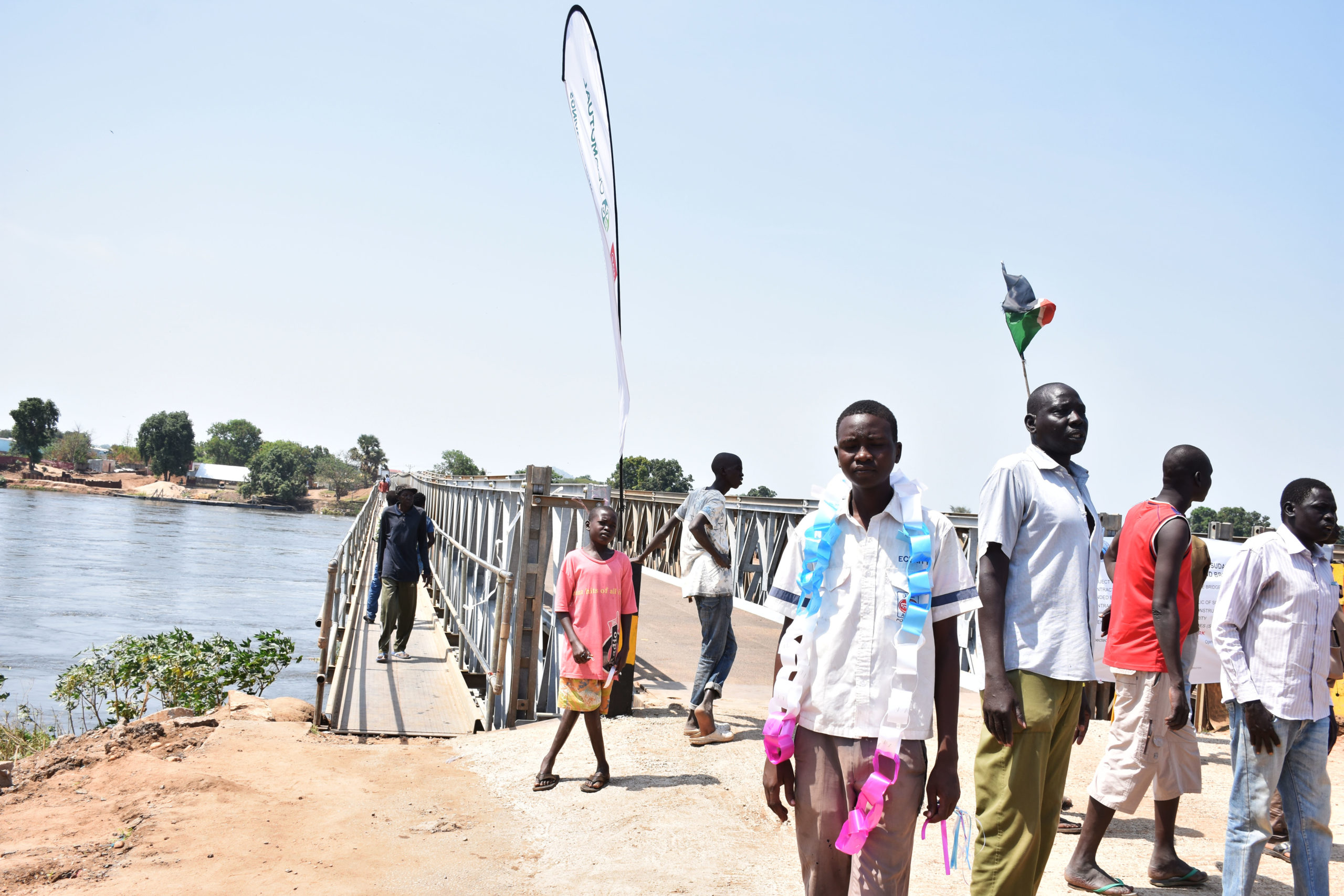
The rehabilitation and reopening of the Juba Nile Bridge lane has rekindled of hopes increased economic activity in Juba and surrounding areas as free flow of transport resumed last week.
The Rhino Company and UK-funded project was completed in April and handed over to the government on Thursday last week after about three months of rehabilitation.
The closure of one of the lanes for repairs caused massive traffic snarl-ups for vehicles entering and exiting the capital, Juba.
Built in 1974, the Juba Nile Bridge connects South Sudan to neighbouring Uganda and the rest of the East African Community.
In a country that depends on imports for food and other services, the disruption of transport across the Nile – world’s second largest river – caused delays that triggered unprecedented price hikes as businesspeople hedged against losses.
Wholesalers and retailers alike found themselves on the back-foot as the possibility of losses looked real because of the long queues of vehicles waiting to cross the bridge. Most times it took more than three hours.
The handing over of the project to the Ministry of Infrastructure Development came as a relief to the transporters and travellers on either side of the bridge.
“Bridges and roads link business and communities. Goods are taken from one point to another point very fast,” Salvatore Garang de Mabior, the Minister of Finance, told reporters on Thursday.
“When the bridge was broken, it took the businessmen many hours to transport goods. They had to wait here until the vehicles in front crossed the bridge. The long wait caused losses to the business community,” Mr Mabior added.
The Juba Nile Bridge consists of two adjacent 252 metre spans over the White Nile on the Juba-Nimule Road. The bridge provides the only access over the River Nile to South Sudan. It was built in 1974 during the regime of Jaafar Nimeiri (before cessation of South Sudan in 2011), from two World War II era bridges.
It was re-opened in January 2012 after major repair works following an accident in 2010 which left one lane of the bridge unusable for heavy vehicles.
A new bridge, the Freedom Bridge, is under construction would have been completed in 2018 for the six-year conflict.
Senior government officials who reside along the exit route of the country were also feeling the pinch inflicted by waiting for hours to cross.
“It was also a waste of time of government officials who are living on the other side of River Nile,” Garang said.
The International Monetary Fund has predicted a six per cent economic growth within Africa, and South Sudan is poised to take the lead despite of the fragile political environment.
However, prediction would have amounted to nothing without necessary infrastructure, particularly an efficient arterial transport system that links South Sudan to the southern African region.
The Juba-Nimule Road is a section of the Great North Road that links cape town in South Africa to Cairo in Egypt and the rest of the continent.
“The bridge is not only used by South Sudanese but also by the rest of the East African Community. We hope when the other spare parts are obtained for completion of the second phase, this will be very good for us as a country, and also for the economy,” Garang told the press during the handing over ceremony.
The Juba Nile Bridge renovation contract was undertaken by the Rhino Company, which has also worked on similar projects in other parts of the country.
“They have been doing this wonderful work in other areas even when some areas like Bor was cut off. They also worked in Sika Rumbek, then Sika Maridi. Maridi was also having problems when the road was cut off by heavy rains. It was not repaired for so many years. So Rhino Company did their best,” Garang said.
Minister of Roads and Bridges Simon Mijak Mijok conceded that the ministry was dealing with a critical challenge saying, the breaking down of the bridge amounted to a national security concern, which attracted the attention of President Salva Kiir Mayardit.