Increased banking mops out hard cash in circulation
Warning: Undefined array key 0 in /home2/cityrevi/public_html/wp-content/themes/_city/single.php on line 65
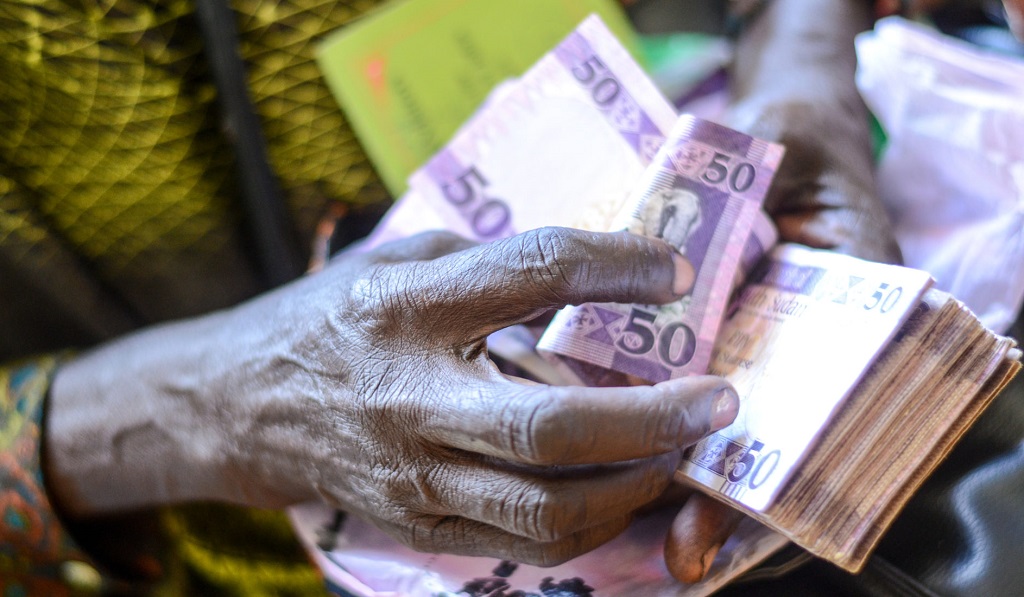
Increased bank deposits have washed out hard South Sudanese Pound cash in circulation.
Bruna Siricio Iro, the chairlady of South Sudan Bankers Association, told to City Review that after the SSP appreciated two weeks ago, a lot of people who have bank accounts in Juba, made deposits limiting the number of money in circulation.
“South Sudanese Pounds are not disappearing…since SSP gained strength against the US dollar, people no longer want to keep SSP cash at home [and] as a result many [people] started banking, so heavy deposits are limiting the SSP circulation,” she revealed.
She attributed the new banking trend to an anticipation that the dollar may totally depreciate against the local currency hence handing an advantage to the people.
“People have the fear that maybe the dollar will total dropdown, so the only thing is for them to deposit the local currency. We have witnessed many numbers of people bring money in to the bank,” she added
The development preceded a move by the Central Bank of South to sanction weekly auctioning of foreign currency to both commercial banks and forex bureaus.
Dollar auction
In April, BOSS allocated US$3 million to 22 commercial banks and US$2million to forex bureaus in a move governor Dier Tong Ngor described as a step to stabilize the foreign exchange rate and save the local currency.
Although people have witnessed the decrease in the dollar rate, the positives are yet to be felt in the people’s pockets, in terms of decreased prices of commodities.
But Iro warned that that prices of goods would come down after taking longer after the markets have adjusted to the changes.
“The traders bought those goods in high prices and if they start selling at low prices, they are not going to [stomach] that just because they are profit minded people,” she said.
She said depreciation in the dollar strength for one or two months would bring the relief to the people. Beside this is coordination with the central bank and other state institutions like the ministry of trade to address the ballooning market prices.
She said: “Most of these traders want to see that what [what is happening] and if the exchange rate continuously go down or even if it maintains its position as of now then prices of commodities will still drop gradually.”
According to Ms. Iro the traders are considering some factors such as renting, taxes and other expenses which they do consider most.
“I think these are some of the factors that could not allow the trader to reduce the prices easily,” she said.
Higher taxation
Meanwhile, the Chairman of Somalia Business Association, Said Jamac Musa, blamed poor relationship between traders and Central Bank for not providing hard currency to the traders.
“One of the big challenges is that traders in the country do not have direct link with central bank otherwise thing would not be like it is going now,’’ he lamented.
“If Central Bank is giving dollar direct to business people, I believe the prices will go down. The black market will be eliminated that is why we say there is no relationship between traders and the Central Bank,” Musa said.
“…the prices remain higher [due to] over taxation of goods from the border up to final destination,’’ he further said, as he also lamented that the taxes had increased even with appreciation of the local currency.
But according to Abdullah Hassan Ali, the Chief Executive Officer, the dollar is not the only factor responsible for the skyrocketing prices in the market.
“…there is also price drop in the market like today 50kg of sugar before it was SSP21, 000, but it dropped to SSP 15,000, 50kg of Maize flour was SSP22, 500 and now it dropped to SSP16,500. Cooking oil 20 litre before was SSP19, 000 but now it has dropped to SSP14,500 and 25kg of rice before dollar rate dropped was SSP12,500 and currently is 8,500 SSP”.
He added the citizens were not yet satisfied with the drop in the prices of commodities and lamented the increase in taxes.
“In Nimule alone, before the dollar rate dropped, the truck of asset of building materials used to be cleared at SSP200, 000 and today [even] after a drop in the dollar rate, it is SSP300, 000 and truck of white flour was cleared SSP216,000. I want to assure you that traders living in South Sudan are overtaxed, and there is no taxes harmonisation,” he said.