Catholic nuns sensitise 25,000 local farmers
Warning: Undefined array key 0 in /home2/cityrevi/public_html/wp-content/themes/_city/single.php on line 65
At least 30,000 households embracing farming have landed a boost to increase their income source and food access.
The groups were introduced to modern farming by the Society of Daughters of Mary Immaculate.
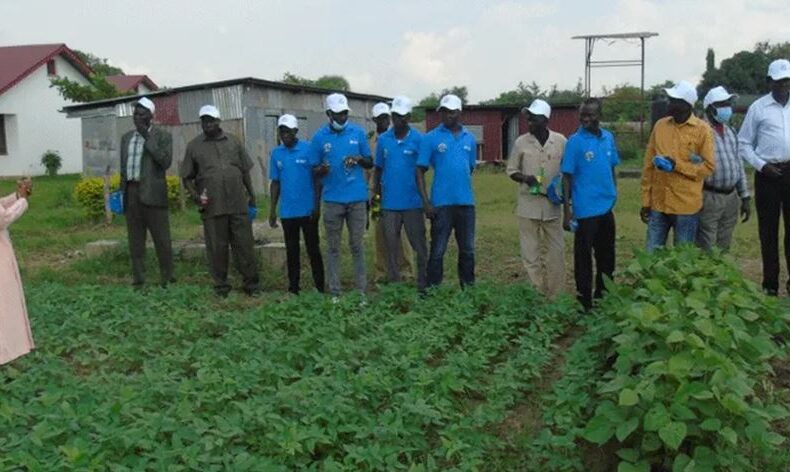
The small-scale farmers in counties of Juba (Central Equatoria State), Gogrial (Warrap), and Yirol (Lake State) received seeds, farming tools and training to improve their yields.
“Feed South Sudan by South Sudanese” has been the slogan in the spirit of the Catholic nuns’ determination in the fight against food insecurity in South Sudan, Manager of Food, Nutrition Security and Livelihood Management of Society of Daughters of Mary Immaculate Sr. Rani Mary said.
“For us, food security is not just access to food which can be supported by food availability in the markets, but for us, food security is about the South Sudanese’ ability to grow their food,” said Sr Rani in an exclusive interview with The City Review on Tuesday.
She said the charity organisation has embarked on supporting farmers in the Central Equatoria State through strategies such as organising the farmers into associations through which SDMI sisters provide various supports to farmers.
According to Rani, SDIM may be having modern technologies, but that is not enough; they have to consult with the local farmers through the farmers’ associations on the appropriate ways of increasing yields.
“The farmers’ field school leaders are decision-makers. [They] nominate participants to the training on modern agricultural practices the SDMI organise regularly for farmers. Agriculture Extension workers and the issue of landlessness is no more an excuse for not growing vegetables,” Sr Rani said.
Reaping fruits
She said they have introduced the concept of the vertical garden which is simple with a high impact.
The organisation also introduced urban and peri-urban techniques where there is limited opportunity for the cultivation of crops on a large scale to the local farmers in towns.
“The practice which let urban dwellers use empty containers to grow vegetables has been combined with backyard gardening by women in communities in the outskirts of Juba. The women can harvest vegetables that serve not just their domestic consumption, but also earn them income,” she added.
In the past three years, SDMI has trained and sent to the communities 120 Agriculture Extension workers. DMI provides irrigation equipment to members of the farmers’ field schools in riverine areas to irrigate their farms during the dry season.
To help increase the crops cultivation areas SDMI also provides subsidized tractor services to farmers.
In her part Food Security Project Coordinator at Society of Daughters of Mary Immaculate, Patrick Tani Kenyi said food is not just grains, it includes all the nutrients someone can get from the plant, and that is why they encourage farmers to plant fruits alongside other crops.
At the demonstration farm in Gurie, the SDMI teach farmers about the different fruits and their nutritional and herbal values. They also supply the farmers with seedlings of the different fruit trees to encourage them to replicate the development of their orchards.
Kenyi said St. Joseph’s training centre in Gurei, DMI offers diploma-level training for Agriculture Extension workers.
“The watershed concept helps farmers conserve water when it is in abundance and use the moist land to cultivate their vegetables during a dry season. This adorable technology can help farmers in areas without access to rivers grow their crops more than once a year,”Kenyi said.