Fuel prices in fresh spike after border taxation stalemate
Warning: Undefined array key 0 in /home2/cityrevi/public_html/wp-content/themes/_city/single.php on line 65
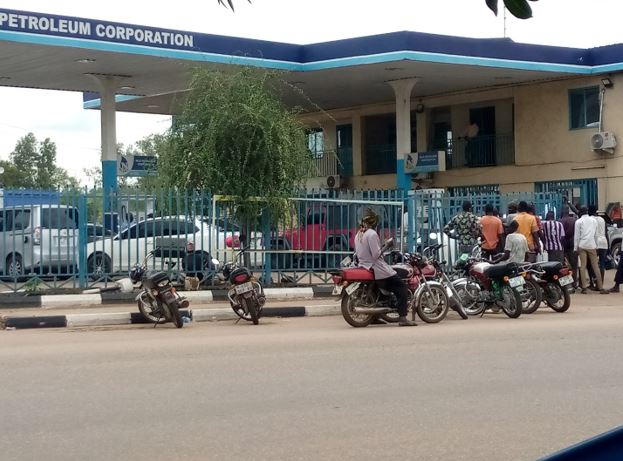
Motorists in Juba have raised concerns over the increasing cost of fuel in the capital.
Although South Sudan has witnessed stable fuel prices for nearly four months, as of Monday, most petrol stations in Juba registered long queues as motorists struggled to get fuel.
In an interview with The City Review on Tuesday, the majority of motorists said they had been having trouble getting fuel for four days.
As such, most petrol stations have decided to increase the prices.
Jal Jal, a motorist in Juba, said he filled his car at the old price of SSP350 per litre five days earlier, but he was surprised to see almost all the petrol stations in Juba raise the prices from SSP350 to 500 per litre.
“It is now two days, I think, but others say four days. The fuel prices have increased from SSP 380 to either SSP400 or SSP450, and even others have reached SSP500, depending on the owners of the petrol stations.
“In black markets, a litre costs between SSP700 and SSP800 depending on the time one buys it,” Jal revealed.
He stated that determining the cause of the increase in fuel prices is difficult.
Another motorist, Gadi Magai, told The City Review that he had been buying fuel at the new price of SSP 500 per litre for three days.
“The rest of the petrol stations now sell a litre at SSP 400, 450, up to 500, maybe only for Trinity petrol station and Nile Petty, which one does not know at what time and who those people are selling to,” Magai said.
He added that “Yes, when you get Trinity and Nile Petty opened, at least you will get it at low prices, but the rest, they have increased all their prices.”
According to Magai, there are rumours that the truck owners are complaining about being overcharged on the Nimule border, saying it could be the reason for the fuel shortage in the country.
Trucks stalemate
Meanwhile, Mohamed Hafi, one of the petrol station assistant managers, said they have not been getting fuel due to some issues related to over taxation at the border point.
“We are not selling high; we just add something little, maybe some places, but for us, we are considering the situation of our customers. Yes, some people who are selling high, maybe they have a reason to increase. We only add SSP 100 to the old price, ” he narrated.
“But I think you’re aware that for almost two weeks now, the oil trucks here have had difficulty because, as they said, they were overcharged at the border point,” Mr Hafi added.
In September this year, Juba City experienced similar fuel price increases when foreign truck drivers went on strike for nearly a month at the Elegu border point in northern Uganda, demanding protection from the South Sudan government before entering the country.
This was when the country could not receive any fuel into the country, leading to a fuel shortage. As a result, the few available fuel prices increased.
Efforts to reach business authorities for comment were not immediately successful.