Neuralink wires up a monkey, humans are next
Warning: Undefined array key 0 in /home2/cityrevi/public_html/wp-content/themes/_city/single.php on line 65
Last year, in edition 66 of The City Review, this column carried an article titled “Your brain is getting computerized soon, experts explain what it means”.
The article discussed how the CEO of Tesla and world’s second richest man Elon Musk could deploy his Neuralink project, a technology aimed at creating a direct, ultra-low latency connection between our brains and our computers.
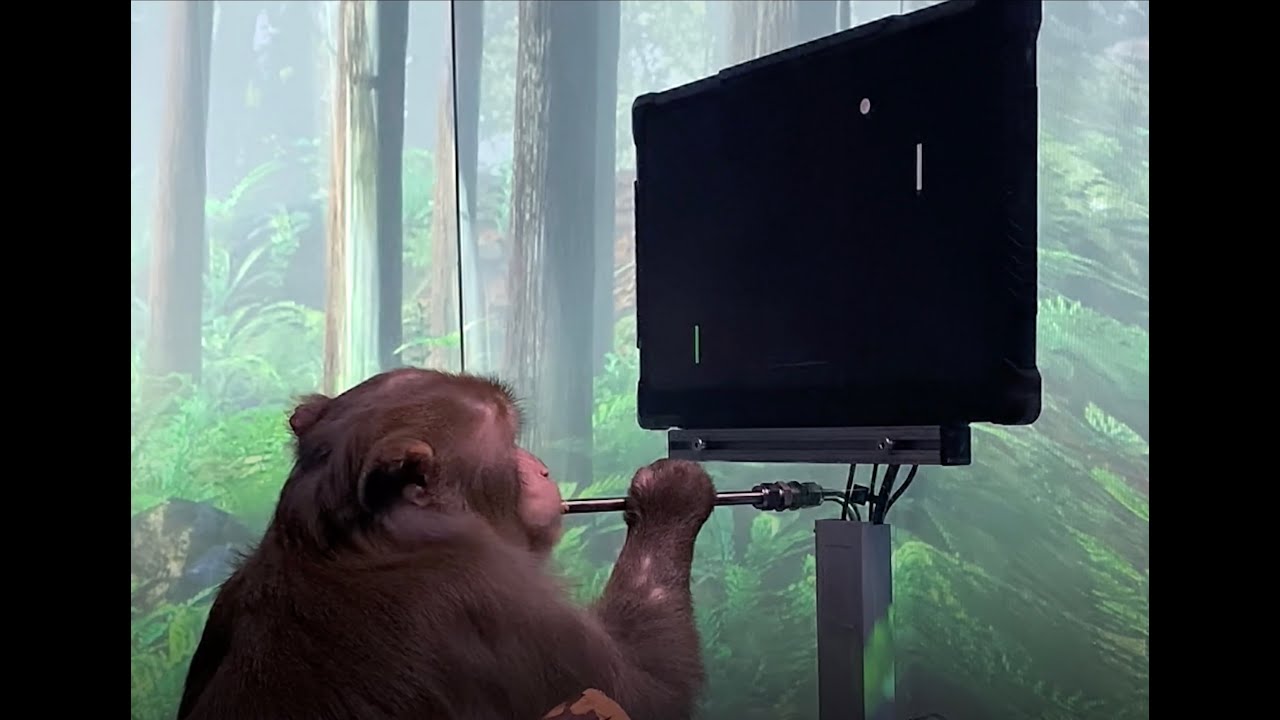
Now, it seems the reality is getting closer. This was evidently seen last week when a 100-member team at Neuralink tested the project on a monkey that was seen playing video games using its mind.
Neuralink put a computer chip into the monkey’s skull and used “tiny wires” to connect it to its brain, Musk said.
“It’s not an unhappy monkey,” he said during a talk on Clubhouse, a new social media app that allows people to have informal voice chats while others listen in. “You can’t even see where the neural implant was put in, except that he’s got a slight like dark mohawk.”
The billionaire said Neuralink is trying to figure out if it can use its chips to get monkeys to play “mind Pong” with each other.
“That would be pretty cool,” said Musk, who is CEO of Neuralink, in addition to SpaceX and Tesla.
Headquartered in San Francisco, Neuralink is trying to develop an implementable computer-brain interface. Musk describes it as a Fitbit in your skull with tiny wires that go into your brain.
As AI gets smarter, Neuralink’s technology could one day allow humans to “go along for the ride,” according to Musk.
To illustrate the pace of progress in AI, the innovator — who believes that machine intelligence will eventually surpasses human intelligence — pointed to breakthroughs made at research labs like OpenAI, which he co-founded, and DeepMind, a London AI lab that was acquired by Google in 2014.
DeepMind has “run out of games to win at basically,” said Musk, who was an early investor in the company.
People are in effect already “cyborgs” because they have a tertiary “digital layer” thanks to phones, computers and applications, according to Musk.
“With a direct neural interface, we can improve the bandwidth between your cortex and your digital tertiary layer by many orders of magnitude,” he said. “I’d say probably at least 1,000, or maybe 10,000, or more.”
Jo Best, a senior medical and tech expert from ZDNet says humanity has been living with the brain computer interface for a while but the current development is heading to another scale, “that of reading our minds!”
The good news is, the brain computer interface, also called BCI, can’t read your thoughts precisely at any given moments. But the interfaces are more about picking your emotional states or which movements you intend to make. A BCI, Best says, could pick up when someone is thinking ‘yes’ or ‘no’.
But if we put computers in our brains, strange things might happen to our minds.
Your brain is amazingly adaptable. It can regulate the rate of your heartbeat, have nightmares, recalls a song you last heard decades ago from just a few notes and even pick up an entirely new language.
It can do all that because brains, according to experts, are plastic: able to rewire the pathways they use as they pick up new skills or respond to differences in the world around them. That neuroplasticity is the brain’s way of keeping up with changes to the external environment or to the body itself.
But the connection of our brains to our computers is something that could change how we view the world, our bodies, and even the speed at which we can produce changes in the world.