EES told to reopen Singaita FM
Warning: Undefined array key 0 in /home2/cityrevi/public_html/wp-content/themes/_city/single.php on line 65
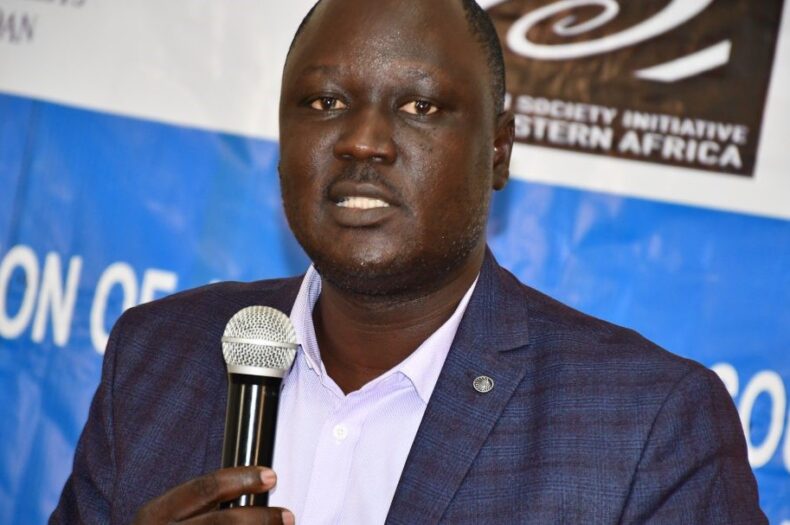
The Union of Journalists of South Sudan (UJoSS) has called on the authorities of Eastern Equatoria State to expedite the process of reopening Singaita 88.3 FM.
In a statement, UJoSS said the closure of the radio station has rid citizens of valuable information and denied journalists to do their work.
Oyet Partick, the President of UJoSS said they were in touch with the state authorities who had promised to reopen the radio station soon.
“The Union of Journalists of South Sudan is in contact with authorities in Eastern Equatoria State over the closure of Singaita 88.3 FM. The Eastern Equatoria State government is promising to resolve the disagreement with the management of the station and that it will begin broadcast soon,” he said.
“Singaita 88.3 FM serves not only the people of Kapoeta with vital information but also the pastoral communities in neighbouring Uganda and Kenya. The closure of the station is denying access to work by journalists employed by the station.”
UJoSS urged Eastern Equatoria State authorities to speed up the process of resolving the disagreement with the management of Singaita 88.3 FM.
“UJOSS believes this action undermines articles 24 and 32 of the Transitional Constitution of South Sudan, 2011, as amended. Article 24 provides for freedom of expression, Article 32 dictates that access to information is granted to the public,” statemen read in part.
Call to investigate crimes
In November, UJoSS called on the government to investigate all the crimes committed against journalists across South Sudan.
Oyet said the state and the national governments should protect journalists from atrocities and violence.
Ahead of the international day to end impunity for crimes against journalists Oyet said the government should prosecute perpetrators and bring them to justice.
“If anyone among the journalists is harmed, his or her right is violated, the issue should not be ignored because some people say these are rumour mongers they always cause a problem. They might have been beaten because they caused a problem but the case shouldn’t be left that way the issue must be investigated and brought to a logical conclusion,” he said.
“My appeal is that protection should be provided to journalists, this protection is not like extraordinary protection, and by protecting journalists you are protecting human rights which is a right of everybody.”
He further called for the information commission and the Media Authority to do their work to ease the work of journalists in the country.
“The institutions should work to make the work of journalists easy because, at the end of the day, the information that the journalists collect and provide to the public helps the public to make decisions,” Oyet said.
He added cases committed since 2014 were pending investigations up to date.
“Those journalists who were killed and up to now their issues are not clear; the people who killed them have never been taken to court and prosecuted. It is not even clear who kills them so when crimes are committed we expect the state to take action to get the people who have committed the crime to be prosecuted when they are found guilty,” he added.
“We have more than 15 cases that somebody has been threatening not to cover stories. We had several detentions without trial, in Juba; we have about three very serious cases then in states we have several cases on threats and detention.”
UJoSS and Community Empowerment for Progress Organization (CEPO) in a joint press release earlier said that perpetuated detention and intimidation of journalists in South Sudan was a clear denial of freedom of expression and the right to access information stipulated in the South Sudan Constitution.
Media reports indicate that ten (10) journalists have been killed since 2014. Another reporter called Peter Moi was also killed in Juba in 2015.
In 2017, a US-British freelance war reporter, Christopher Allen was shot dead by a government soldier in Yei-River County, Central Equatoria State as he was covering fighting between the government and the SPLA-IO forces.