Cultural ‘bias’ to blame for drying Juba blood bank
Warning: Undefined array key 0 in /home2/cityrevi/public_html/wp-content/themes/_city/single.php on line 65
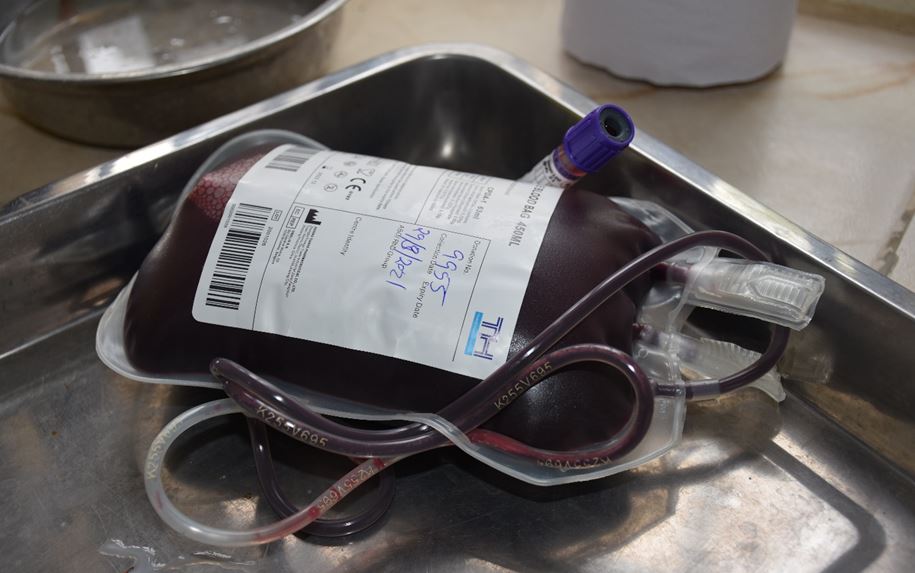
For Juba City residents, particularly low income earners, Juba Teaching Hospital is one of the saviours of the day when one falls sick.
But with its affordability comes the dilapidation of facilities and dried blood bank that defines the sorry state of healthcare in the city.
The National Blood Transfusion Services says the blood crunch—which now complicates treatment of accident victims and safe deliveries—has been occasioned by unwillingness to voluntarily donate blood.
“The reason why the hospitals are not getting blood is because people don’t come to donate blood, so if people don’t donate, we will not have blood in the blood bank,” Dr. Victoria Achut, the Director at the National Blood Transfusion Service said.
She compared the blood bank to the monetary banks saying “blood bank is very rich like any other banks. If people don’t put money in the bank, there will be no money so if our citizens don’t donate and they expect to get blood, that is not going to be easy”.
Cultural barriers
Achut says the culture of voluntary blood donation was poor among South Sudanese. The director reveals that donors who showed up were mostly foreigners.
“We have also tried our best to recruit a number of people to be regular blood donors but unfortunately because of the COVID-19 situation were not able to carry out blood donation drive for a long time and also the culture of people not coming to donate blood with the fear of COVID-19 pandemic has also been an obstacle for people not coming to donate blood,” she said.
She added that the facility also managed to reduce the beds into two in each room in order to create a distance in the rooms when donating blood as a measure of physical distance for those who come to donate blood.
Achut said that they also face challenges most especially the facility is managed with three lab technicians.
“The lack of stuff is the biggest challenge because you cannot run a blood transfusion service with three lab technicians and only three nursing stuff and one counselor,” she said.
She said it was difficult, exhaustive, and time-consuming for the canceller to carry out the work.
“It is time consuming counselling a person coming to donate blood, because you have to be relaxed talking to the client. Some of them turn out to be HIV positive at times so that also needs pre-testing and pro-testing counselling and also trying to convince them,” she added.
On Monday, March 29, three people died in an accident that involved a water browser, a motorbike and another vehicle belonging to Sans Medecins Frontieres.
Among those who died was a local musician, Trisha Cosmos, popularly known as Trisha C.
According to a statement issued by a youth lobby group, Anataban, all the efforts to save Trisha’s life proved futile making her to succumb to the injuries. The group blamed medics at Juba Teaching Hospital for negligence leading to the death of their colleague.
“It took over 3 hours to give blood despite the blood donors being adequately and timely present. It’s also worth noting that the blood bank was found closed when its services were needed the most. “The Negligence, recklessness, and poor health facilities and services continue to be one of the leading causes of avoidable deaths countrywide,” Anataban protested in their statement.
The culture of blood donation on voluntary basis in South Sudan is compounded by negative perceptions widespread among members of the community, with some saying blood sharing is unusual.
“I fear donating blood because people say that sharing blood is unnatural and it will make me sick, Juma explained
He added, “I once donated blood to my brother’s wife when she was very sick admitted at Juba hospital but when the doctor wanted to give her the blood, she rejected it and as for me I became very sick after donating so I fear sharing my blood”.
Another person only asked to be identified as Musa questioned why in the first place he should donate blood and yet they get nothing in return.
“How do you want me to donate my blood in this poor conditions? do you want to kill me? if I give my blood I will be weak and who will feed my family, treat me and besides I hear it is for free that is not fair,” he said.
“I have never donated blood in my life so I don’t think I can, besides where does the blood even go?” Mary, a housewife questioned.