Is Athian the sought-after man to shape country’s economy?
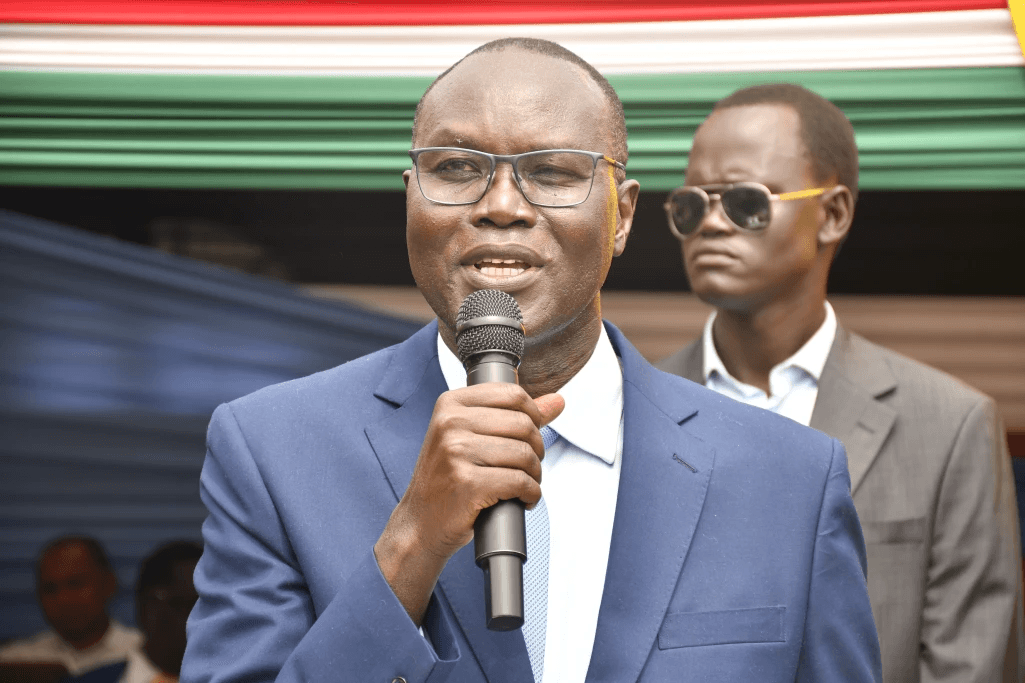
Various faces have been at the helm of the country’s finance ministry, the latest to have held the position being Dr. Marial Dongrin Ater, who, on Thursday, was dismissed by President Salva Kiir.
By Aguok Chok
Undoubtedly, the Ministry of Finance and Economic Planning plays a critically significant role in a country, acting as the central architect of its economic and fiscal health. Essentially, it is the heart and soul of the economy, enabling management of finances, national budget preparation, tax and monetary policies development and public investments, oversees debt and public investments, all activities aimed at achieving one main objective- ensuring sustainable development in the country.
So, when President Salva Kiir vowed that he would not rest until he finds the best man or woman for the ministry, the country, obviously, felt it. For, it would be the individual’s onus to work collaboratively with various areas to ensure success of the economy.
Various faces have been at the helm of the country’s finance ministry, the latest to have held the position being Dr. Marial Dongrin Ater, who, on Thursday, was dismissed by President Salva Kiir.
Dongrin was the seventh to hold the post since 2020.
Athian Diing Athian now takes up the position, which he previously held between 2020 and 2021.
Speaking to The City Review exclusively, a renowned South Sudanese economist, Dr. Abraham Maliet, described the reappointment of Athian as a sign of a renewed search for economic solutions rather than political reshuffling.
According to Dr. Maliet, the changes in the Finance Ministry reflect the President’s determination to address the country’s economic crisis.
The economist acknowledged the frequent changes at the Ministry of Finance, but said, “I believe it is unprecedented to have seven ministers in five years.”
“But you can see the magnitude of the sale that His Excellency is embarked on; he is seriously searching for solutions.”
On Athian’s return, Maliet stressed that the minister comes back with experience and reflection from his previous tenure. “So, I think we call him a returnee. He is returning to the seat. And I believe he would have an agenda. He would benefit from all the challenges that faced him first time, due maybe to the lack of understanding the parameters of the job or the pressures from the so-called cartels.”
According to Maliet, Athian’s second chance gives him an edge.
“Now, what were the challenges that he could not handle in his first term? That is an experience he would definitely apply here. Whatever was a challenge last time, taking time off, reflecting on his time in the office, he is setting the priorities. I think he is now in a better position to challenge himself.”
Maliet highlighted Athian’s professional background and urged him to focus on key financial questions.
“Why are we not having enough cash in the economy? Where is the money? Where are they going? Who is holding them and why?”
Maliet urged Athian to build a professional and cohesive team to work as one unit, one-minded, to pursue policies that will get passed over.
“A communicative team, because if you don’t communicate with people, people will not understand what exactly we’re working on.”
Also, he expected stronger engagement with banks and taxpayers, “These private banks must be made accountable. Why are people not banking with them? There needs to be a conversation with the banks. Hey guys, what you are selling to be able to tell the public, please bank your money.”
Maliet expressed confidence in the minister’s preparedness.
“You had an opportunity to come back. You come back prepared. So, I believe Athian is prepared. The goal is to solve the problem.”
Economic Diversification
Athian comes in at a time when talk is rife on economic diversification, to alleviate country from over-reliance on oil, which has been severely impacted by war, disrupting export and much-needed revenues. The ripple effects has been profound; an economic downturn characterised by hyperinflation and currency depreciation.
On the other hand, there has been a significant reduction in humanitarian aid, cutting off essential economic ventures and jobs.
Adding more pressure to the situation are the climatic shocks, including flooding. Internal conflicts and food insecurity have also been recently witnessed.
The new minister, arguably, has a headstart, with the new Central Bank leadership, introducing key measures to stabilise the local currency and address issues of concern including formalise the financial sector through digitised transactions and collaboration with financial players to safeguard the sector.
However, Hon. Athian has a long to-do list in his tray. And the country is hopeful for an economic turnaround.