Peace monitors to gov’t: Wrap up the deal

Peace monitors have urged the government to accelerate the completion of the implementation of the remaining crucial provisions of the revitalised peace agreement.
Their call to action came at a time when the transitional government of national unity formed under the jurisdiction of the revitalised peace agreement is left with 10 months to come to an end before the country could go for elections.
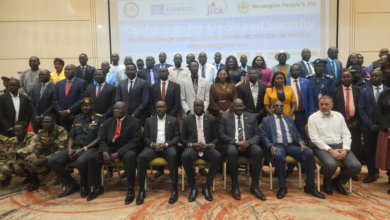
On Tuesday, President Salva Kiir launched public consultations on the establishment of the commission for truth, reconciliation, and healing in order for the technical committee to kickstart their work across the country and in the diaspora.
Addressing the gathering, RJMEC Chairperson, Maj. Gen. Charles Tai Gituai, called on the Revitalised Transitional Government to prioritise speedy implementation of all chapters of the agreement in letter and spirit.
“This is the promise and commitment that the parties made to the people of South Sudan in order to ensure justice, equality, respect for human rights and the rule of law, as stipulated in the preamble of the Revitalised Agreement on the Resolution of the Conflict in the Republic of South Sudan,’’ Maj Gen Gituai said.
According to Maj Gen. Gituai, the debut of the CTRH is encouraging despite hurdles such as a lack of funds and other restraints that caused the procedure to be delayed three months after R-TGoNU was established.
He recommended that the technical committee take measures to guarantee that the public consultations are conducted in accordance with international human rights standards and best practices.
He urged the technical committee to carry out this process in accordance with the R-ARCSS in letter and spirit.
“RJMEC expects that the Technical Committee will undertake the process in a manner that gives opportunity to the men, women, girls, and boys of South Sudan to meaningfully participate and give their honest views about the kind of CTRH they wish to see established, “Gituai added.
The R-JMEC chairperson called on the administrations, especially state governments, to work together to protect civic space and build an inclusive environment so that the public can feel more confident in participating in the process.
This, he claims, will increase the CTRH’s sense of ownership once it is founded, making truth, healing, and reconciliation even more attainable goal.
“Now that the committee is ready to embark on a very important phase of its work, I wish to encourage them to work efficiently and diligently to undertake meaningful public consultations and thereafter issue to the country a comprehensive report in a timely manner containing findings and recommendations that will inform the drafting of CTRH legislation of good quality,” he emphasised.
Meanwhile, Nicolas Haysom, the UN Secretary-Special General’s Representative for South Sudan, said the CTRH’s launch indicates the government’s commitment to justice, accountability, reconciliation, and healing.
“I strongly encourage all parties to renew their commitment towards the completion of the remaining benchmarks in the peace agreement,” UNMISS chief said.
“The resurgence of sub-national violence across the country, amplified by growing humanitarian need, underscores the urgency of this moment,” said Haysom.
Mr. Haysom stated that addressing all of the core causes of power is the only way to achieve truth, justice, reparation, and a guarantee of non-recurrence.
“Our collective hope is that reform and reconciliation can contribute to a more reliant, stronger and harmonious society. “Transitional justice is a perquisite for sustainable peace,” said Haysom.
He commended the government, particularly the task force inside the ministry of justice and constitutional affairs in charge of overseeing the implementation of Chapters 5 and 6 of the peace agreement, as well as the technical committee’s duties in establishing truth, reconciliation, and healing.
“I encourage the additional steps necessary to advance the other mechanisms contemplated by that chapter,” he urged.
He said that UN agencies would continue to provide capacity building, technical, financial, and logistical support to the government of South Sudan on transitional justice concerns at the national, state, and local levels.