Renewed calls for unification of forces to forestall peace, security
Various stakeholders urge for unification of forces and urgent deployment to conflicted areas to restore peace and stability, and enhance seamless development and progress in the grassroots
By Aguok Chok
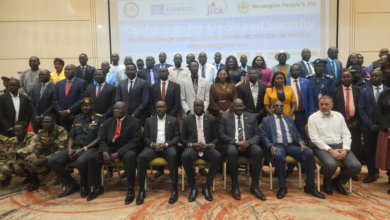
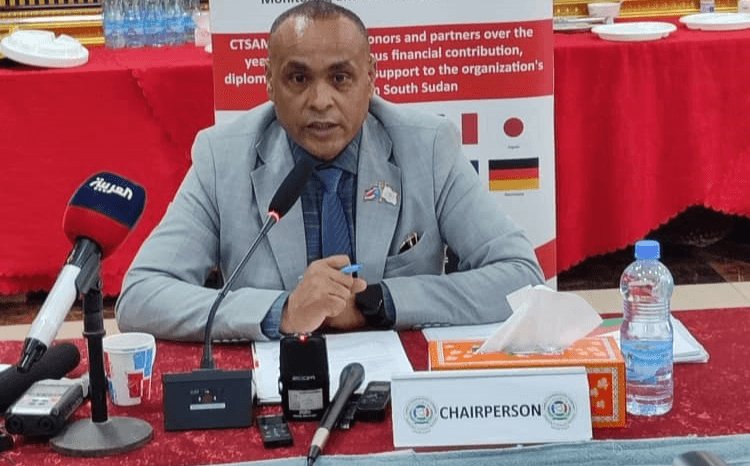
At the Ceasefire and Transitional Security Arrangements Monitoring and Verification Mechanism (CTSAMVM) Technical Committee meeting held on Tuesday in a Juba hotel, various stakeholders emphasized on peace and security, with some attributing to the delay in implementation of the security arrangements for the rising spate of insecurity in the country.
Gen. Bior Leek, a senior representative from the Former Detainees (FD), outlined critical issues affecting the peace process in South Sudan, and underscored the urgent need for a concerted effort to monitor and verify the implementation of the Revitalized Agreement on the Resolution of the Conflict in South Sudan (RARCSS).
He urged all parties involved to embrace peace and recognize its benefits, particularly the dividends that come from a stable and secure environment.
On the ongoing violence and incidents in Nasser County, Gen. Bior questioned why the region has suffered from conflict for six years, and insisting that stakeholders unpack the root causes of unrest in the region. “What is going on? Since the beginning of this Revitalized Peace in 2018, there is no peace in that town. Why don’t we go and see what the peace dividend is?” he asked, offering a proposal to the unrest.
Deployment of the National Unified Force
According to the Former Detainees representative, deployment of a National Unified Force to Nasser could help restore peace and stability. However, such suggestions have not been successful in the past, Bior said.
He challenged the monitoring teams to find concrete evidence of the underlying issues driving the conflict, emphasizing, “It is our responsibility to go down and look at it,” he said, challenging the monitoring teams to find solution to the underlying issues, even as he called for parties to work together to find a peaceful resolution.
“If the parties today divide this country to their own appreciations, it is not acceptable,” he warned, and further asked for accountability.
“Who is responsible for the security of the population and the citizens of this land?” He insisted that clarity is needed regarding the command structure of the security forces, particularly regarding the SSPDF’s role in Nasser. “Who is the commander of the white army in Nasser?” he queried, demanding answers to ensure those responsible for the violence are held accountable.
The statements come amid recent attacks between the SSPDF and armed civilians in Nasir County, that claimed the lives of 17 people, among them soldiers and civilians, in an attack army spokesperson attributed to have been started by a love triangle gone tragic. This, coming hot on the heels to another incident in Central Equatoria State’s Wonduruba Administrative Payam, where ten men were gruesomely killed, just moments after the state governor, Augustino Jadalla, left the area.
These killings have attracted discontent and rebuke from all the political actors and leaders in the country, with the ruling SPLM, opposition SPLM-IO among other stakeholders at the CTSAMVM meet, condemning the incidents.
However, the biggest call was for speedy unification of forces, and their deployment to the affected areas to tame the escalating cases.
In its third quarter report released early this month, the Reconstituted Joint Monitoring and Evaluation Commission (RJMEC) urged the Revitalized Transitional Government of National Unity to provide, as a matter of urgency, all the resources necessary to complete the redeployment of the remaining Necessary Unified Forces (NUF), and also complete harmonization of the command structure so that the country can have a unified force with a national character under one commander in chief.
Such calls have been shared by other actors, including traditional leaders. Speaking during a two-day workshop on the constitution-making process in Yambio over the weekend, Lotto Anibiapai, a representative of the Prime Minister of the Azande Kingdom stressed on the urgent need for the unification of South Sudan’s military as a critical measure to improve the nation’s security and stability.
Anibiapai explained that without a unified army under one command, peace and security would remain elusive. “The soldiers still languishing in containment sites must be trained and unified under a single leadership. We cannot have one country with different forces under separate commands. Immediate unification and deployment are essential for us to have one national military that serves and protects the entire nation,” he said.