WHO refutes claims of yellow fever outbreak in South Sudan
Warning: Undefined array key 0 in /home2/cityrevi/public_html/wp-content/themes/_city/single.php on line 65
By Francis Mading
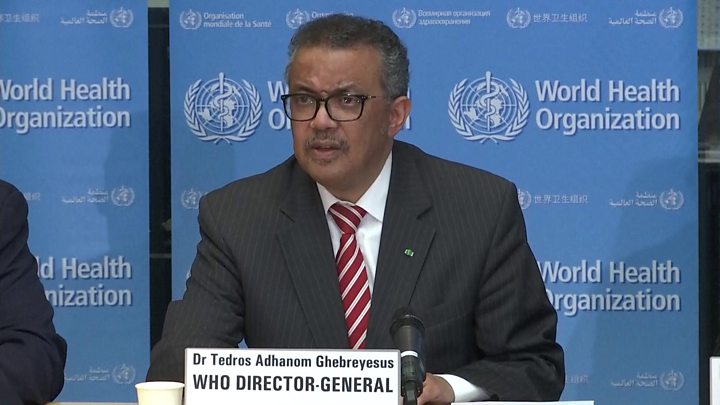
The World Health Organisation office in South Sudan has refuted as misleading claims that there is an outbreak of yellow fever in the country.
In a press release a day after it was reported that two yellow fever patients had been found in Koja Keji region in the south, WHO said the report was alarmist as the confirmed cases of yellow fever do not pose a threat.
“The World Health Organisation would like to provide clarifications on a post on its website on April 10, 2020 regarding yellow fever cases in South Sudan,” the press release reads.
The statement said the Rapid Response Team of the Ministry of Health, with the support of the WHO had teamed up to arrest the situation in the border village of Koja Keji.
Two suspected yellow fever cases were identified in Kajo Keji during routine health checks. Initial tests conducted at the National Public Health Laboratory in Juba gave negative results. However, subsequent tests conducted at the Uganda Yellow Fever Regional Centre confirmed yellow fever in both cases, pointing to continued yellow fever transmission in the region.
In the press release, WHO said only the government through the ministry of health could provide accurate information on the status of infections.
“Guidance and recommendations will be provided to the Ministry of Health to take appropriate action. The World Health Organisation wishes to reaffirm that the declaration of an outbreak is the prerogative of the government of the Republic of South Sudan and not the World Health Organisation,” the statement read in part.
Yellow fever is an acute viral haemorrhagic disease, transmitted by infected mosquito bites and has caused major epidemics of the yellow fever belt in Africa and the Americas.
Symptoms of yellow fever include fever, headache, jaundice, muscle pain, nausea, vomiting, and fatigue. “Yellow” in the name refers to the jaundice that affects some patients.
Although an effective vaccine has been available for 60 years, the disease remains a serious public health threat.
Two cases were identified in the Kajo Keji region, which borders Uganda, where an outbreak of viral haemorrhagic disease was detected early this year, the United Nations health agency said on Monday.
Owing to spontaneous return of populations displaced by fighting from Uganda, South Sudan has experienced gaps in surveillance, poor health services.
Travel restrictions due to Covid-19 and the start of the long rains season, which provides a favourable breeding ground for mosquitoes that spread the virus, has further complicated the situation in the region.
WHO said that the spread of the yellow fever epidemic is a threat in South Sudan, as the estimated total immunity of the population is negligible with immunity of nearly zero percent in Kajo Keji.
South Sudan experienced the last yellow fever outbreak in November 2018, in Sakur Payam, in Western Equatoria.
To counter the imminent outbreak, the South Sudan Ministry of Health, with the support of the World Health Organization, planned to launch an interactive vaccination campaign in the affected area, and proposed the implementation of preventive mass vaccination campaigns by 2022.