Cloud of doubts meets government’s reconciliation efforts
Warning: Undefined array key 0 in /home2/cityrevi/public_html/wp-content/themes/_city/single.php on line 65
The revitalised government has begun the process of hybrid court formation amid scepticism about whether the mechanism would address justice issues and bring lasting peace to the country.
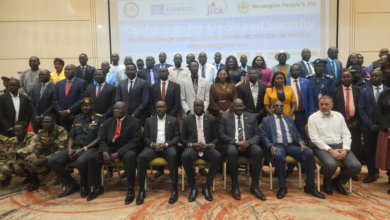
On Wednesday, June 30, the Ministry of Justice and Constitutional Affairs launched the establishment of the Truth, Reconciliation and Healing Commission (TRHC) to mark the start of the implementation of Chapter Five of the R-ARCSS.
This came following January 2021’s cabinet approval of the creation of the court. The cabinet asked the Ministry of Justice and Constitutional Affairs to expedite the process in accordance with R-ARCSS.
Speaking during the event the First Vice President, Dr. Risk Machar Teny called on the technical committee to ensure the transparency of the truth, reconciliation and healing process to effect lasting peace in the country.
”There is a challenge that this national process must be credible, and for it be credible, we have to transparent. We would want to provide the aggrieved a chance to speak,’’ said Dr. Riek, as he added: “We talk of peace, a peace without justice does not hold.”
The First Vice President noted Chapter Five was incorporated into the revitalised agreement after resolving initial objection by some party members that it would instigate new conflict.
“The negotiations this (Chapter Five) was problematic because there were those who used to say if you have transitional justice chapter [then] it might affect the process of peace. But the finally compromise was, we must have,” he added.
This notion seems to be having a backing from a new research which has revealed that skepticism abounds in the society, and many people doubt the efficacy of the court in resolving hatred.
The study was conducted by Abraham Diing Akoi, researcher at the LSE Center for Public Authority and International Development at eh Firoz Lalji Institure for Africa last month in Juba, Bor and in IDPs camp.
“Most South Sudanese societies prefer forgiveness and reconciliation among warring parties over individual punishment. In a society where revenge is a norm, the hybrid court cannot be an appropriate approach for transitional justice during the current, delicate situation.
“In 1991, when SPLA Nasir came to my village and wiped out everything including my husband and son, I was angry and I am still angry, will the hybrid court give me justice?’’ a widow told researcher.
An SSPDF soldier told Diing the court would not address the root causes of the conflict adding the only solution to the ongoing conflict in South Sudan was election to allow citizens to choose their leader.
“Now is not the right time to for the hybrid court, find us a way to choose our leader and stop trying to come after President Kiir because it can be messy,” the soldier who based in Juba told Diing.
The Chapter Five of the –ARCSS provides for establishment of Hybrid Court that would try perpetrators of atrocities committed during the war, alongside the Truth, Reconciliation and Healing Commission and the Compensation and Reparation Authority in the South Sudan.
According to a SSPDF soldier, the court would trigger another conflict in the South Sudan, calling for its discontinuation.
“I fought Riek’s SPLA Nasir in 1991 and I also fought Riek’s in 2013, I know exactly what happened, I will shut down the hybrid court because it is going to open wounds that cannot be closed,’’ the SSPDF soldier added.
But Mr. Samuel Doe, United Nations Development Program (UNDP) deputy Resident Representative believes the hybrid court as a popular demand of South Sudanese would address root causes of conflict in the Republic of South Sudan.
“The Truth, Reconciliation and Healing Commission will play a vital role in addressing the difficult period in the history of South Sudan,” said Mr. Doe during the launch of TRHC technical committee on Wednesday.