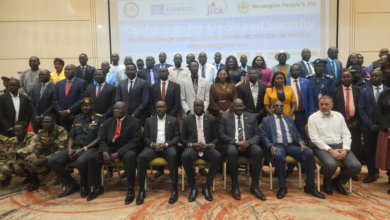
Gov’t launches multifaceted agricultural projects

The Ministry of Agriculture and Food Security with support from the World Bank has launched two concurrent projects to avert the country’s potential devastating food insecurity.
The $ 113 million worth of Resilient Agriculture Livelihoods and Emergency Locust Response Projects funded by the World Bank will be implemented by the government in collaboration with the Food and Agriculture Organisation of the United Nations (UNFAO) in 13 counties of South Sudan’s five states.
These include Eastern and the Central Equatoria States, Northern and Western Bahr el Ghazal States and the Upper Nile states.
The resilient agriculture livelihoods will focus, on building the capacity of local farmer-led organisations, community-based seeds producers, and government officials to boost agriculture produces.
The emergency project will focus on strengthening the preparedness system against transboundary pests in South Sudan. It will provide unconditional direct income support to people in the locust affected parts of the country.
“I thank the partners on top of them the World Bank and the Food and Agriculture Organisation,” Dr. James Wani Igga, Vice President and Chair of Economic Cluster said at the launch.
“South Sudan should learn from the locust history if not it will continue to victims.”
Dr. Igga said last year’s locust infestation plunged some parts of the country into serious food insecurity, which the government should treat as a national issue.
He added that increased access to agriculture finance by farmers should also be made a priority to avert food insecurity in the country.
“There are many challenges, but can be turned into an opportunity. With support from our partners we will change the narrative of agriculture and food insecurity in this country,” said Josephine Lagu, Ministry of Agriculture and Food Security.
“The responsibility is huge but we in the ministry are competent, and we will do what we can to achieve the projects’ objectives,” she said.
Emphasising the importance of the implementation, Mr. Firas Raad, World Bank County Manager in South Sudan, said the two projects will improve the economy and livelihoods of the citizens.
“If we do drive agricultural transformation over the next years and decades, it will help diversify the economy, improve economic prosperity, will create jobs for the youth, empower women. It will, more importantly, address the deepened crisis of food insecurity here in the country,” said Raad,
Helger A. Kray, the World Bank’s Practice Manager for Agriculture and Food Security said the projects will be a test for donors’ partnership community with South Sudan.
“The time for conceptual thinking is coming to an end for these two projects. From now on it is implementation,” Mr. Kray said.
“If these projects do not hit the ground, if they do not leave to visible results in a scannable period of times, then trust can easily be eroded.”
South Sudan’s food insecurity is one of the worst in the world with more than half of its estimated 13 million people expected to face emergency food security this year.
This could be prompted by multiple factors such as flooding and drought as a result of climate change, sub-national conflict, and the impact of the COVID-19 Pandemic, which require joint efforts of government and partners to avert.