Acuei vs Abdelbagi: Who will blink first in MoH saga?
Warning: Undefined array key 0 in /home2/cityrevi/public_html/wp-content/themes/_city/single.php on line 65
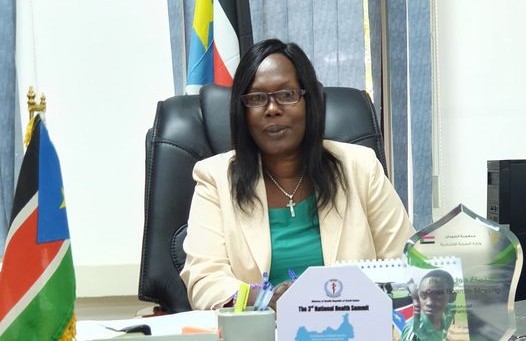
Cast at the nucleus of controversy and speculations, the Ministry of Health has been in the spotlight over the stalemate on the restructuring saga at the country’s main referral facility; Juba Teaching Hospital.
The ongoing conflict between the Vice President for Service Cluster, Hussein Abdalbagi, and the Minister of Health, Elizabeth Achuei, and her Undersecretary, Victoria Anib Majur has continued to rage with parties pulling in different directions.
While the whole situation has been reduced into a dramatic scene where the centres of power have flexed their authority, many wonder what could have inspired the changes that spiralled into a full-blown blame game.
How it began
It all started on October 10 when Vice President Abdelbagi directed Anib to conduct necessary changes in the management of the Juba Teaching Hospital that may assist in finding an amicable solution to the current crisis at the facility.
In the letter obtained by The City Review, Abdelbagi further directed Anib to ensure the cleansing of “mess” created by some doctors.
“Address the persistent issue of doctors’ mess and ensure that the right doctors working at the Juba Teaching Hospital are accommodated,” partly read Abdelbagi’s order to Anib. It added: “Look after the new occupants of the doctors’ mess in terms of their welfare,’’ the letter stated.
To respect the directive, Majur moved forward and appointed Dr Alier Nyok as the Director-General for Medical Services, Dr Thuou Lui, Director-General for Training and Professional Development, and Dr Michael Samuel Mading, Director-General for Policy and Planning.
She also restructured the hospital’s administration, appointing
Janet Michael as the Director-General for Reproductive Health, Dr Frederick Khamis Tawad as the Director-General for Juba Teaching Hospital, Dr Garang Dakjur as the Deputy Director-General for Juba Teaching, and Dr Brian Madison as the Director for Training and Professional Development.
On Friday, October 15, Acuei surprisingly issued a ministerial order cancelling the administrative restructuring at both the ministry of health and Juba Teaching Hospital, quoting a legal basis.
“In exercise of powers conferred upon me under 114(2)(c) and Article 31 of the Transitional Constitution of the Republic of South Sudan 2011 (as amended), read together with the Republican Decree 222/2021, I, Hon. Elizabeth Achuei Yol, the Minister for Health, do hereby issue this Ministerial Order,” read the decree in part.
“Cancellation of all appointments, reassignments, and transfer of Directors and Directors General at the Ministry of Health and the Juba Teaching Hospital as per orders and letter dated 10th 2021,” partly read the Acuei’s order.
It further said, “This includes, by extension, all subsequent appointments, decisions, and directives made by the Undersecretary without prior consultation with the Minister”.
The dispute seemed to have stirred the frustration of the medics who had already laid down their tools due to poor working conditions and delay of salaries as well as other benefits.
On Tuesday, October 20, the South Sudan Union of Doctors (SSDU)—a body established to advocate for the social wellbeing of healthcare workers in the country—issued a statement expressing deep concern about this unhealthy coordination among the health authorities, saying it was likely to harm healthcare service delivery.
“The SSDU further calls on H E Salva Kiir Mayardit and the entire Presidency to quickly intervene, find a lasting solution to the differences, and put the MoH back on the right path.
“The SSDU hopes the Presidency will encourage the MoH leadership to maintain high integrity and professionalism and carry out their mandate for the benefit of the people of South Sudan,” they partly said in the statement.
At the time of giving the statement, the minister exercised her powers and suspended Dr Majur and replaced her forthwith with Dr Samson Baba Paul in an acting capacity. But Acuei did not disclose the reasons for the move even as she ordered a three-month-long investigation over the saga.
This triggered a bitter protest from the besieged undersecretary.
According to Majur, she acted in adherence to the Vice President’s directive which reached her when her boss was not in the country and patients were dying at Juba Teaching Hospital due to strikes by the medics. She said her actions were noble and had no intention of insubordination.
“I don’t know the reasons and there is nothing I can say about it. I was not told the reasons but first, it has to do with the restructuring that happened during the crisis at the Juba Teaching Hospital. I was addressing a crisis and was advised by Vice President Abdalbagi to do the restructuring because there was a serious crisis of strike by health officers,’’ Dr Majur was quoted by Radio Tamazuj saying on Thursday.
The deadlock
She added: “Some people think that I am undermining the minister but the minister was not in the country. Normally I cannot do anything without consulting her, but as she was not around we are responding to a very serious crisis at the hospital as doctors were on strike and people were dying in the hospital. We cannot wait for the crisis for someone to come back from the US. How is that the reason she decided to suspend me?
As of Friday, local media reported that the undersecretary had decided to stay put till a reason for her suspension was adduced.
A day before that, on Thursday, the Presidential Press Secretary Ateny Wek Ateny said President Kiir has ordered Tut Gatluak, Presidential Security Advisor who doubles as the Chairperson of the National Transitional Committee (NTC) to resolve the matter.
“The President has the information and he asked the person in charge of the implementation of the peace agreement that is Hon. Tut Tathluak Manime, will be speaking to all the parties involved in this constitutional fight and the solution will be provided accordingly,” said on Thursday as quoted by the Eye Radio.
However, according to Chapter 1. 4.2.5, of the Revitalised peace agreement, the appointment of the undersecretaries of the ministries shall be done by the president based on the proposal of the respective ministries and vetted by the Council of Ministers.