Maridi Teachers Training Institute offers ten scholarships to CES
Warning: Undefined array key 0 in /home2/cityrevi/public_html/wp-content/themes/_city/single.php on line 65
By The City Review
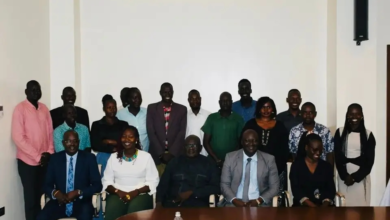
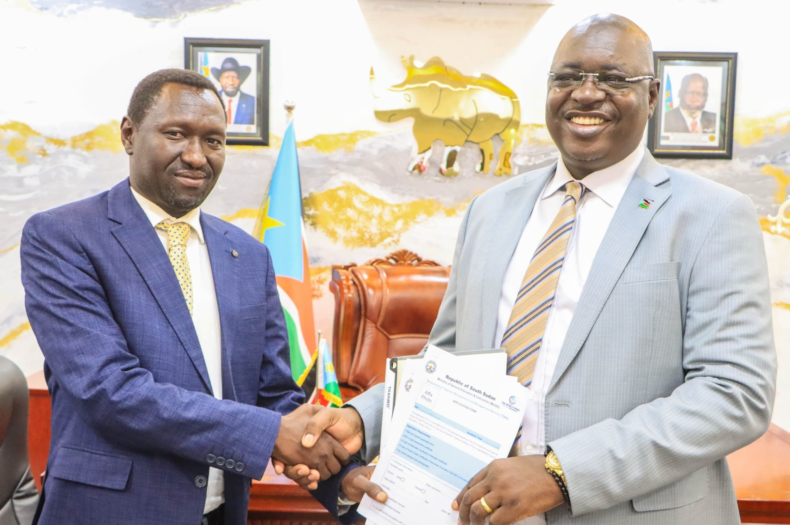
Central Equatoria State Governor Emmanuel Adil Anthony on Tuesday received ten scholarships from Maridi National Teachers Training Institute. The education program is supported by The World Bank and is to run for a period of three years, the State Government noted in a statement.
The Scholarship, presented by the Principal, Ustaz Jackson Wilson Sebit, is expected to boost education sector through training of students who are aspiring to become professional teachers.
Governor Adil lauded the Institute for the opportunity provided, affirming his continuous commitment to working collaboratively with Maridi Institute in advancing education and youth empowerment skills.
“The scholarship opportunities awarded is part of a stronger cooperation agreement between Western Equatoria State through Maridi Teacher’s Institute and Central Equatoria State. Successful students who complete their study at the Institute will be deployed to various Government aided schools in order to improve learning skills and professionalize teaching systems,” noted the state government.
Upon receiving the scholarships, Governor Adil directed the State Ministry of Education and General Instructions to swiftly implement the offer by availing the opportunities to rightful students who are aspiring to become professional teachers in order to enroll for the training.
However, the move has attracted public reactions, with some Central Equatoria State constituents suggesting that the scholarships be distributed among the six counties of the state.
“Let it be distributed among the six counties of Central Equatoria State,” stated Lino Aku, sentiments echoed by another social media commentator, Kingsley Ceaser.
The move has been welcomed by the public, with many seeing it as a positive step towards addressing the education workforce gaps in the state.
According to sources, over 75 percent of active educators lack formal pedagogical training, with many teachers being secondary school leavers or unqualified volunteers tasked with running classroom.
To bridge the gaps, both national and state governments have been engaging with development parters to enhance education in the region.